Bitcoin Miner - Gold Diggers
- 729.00
- 4.7
- Installs
- 100.00K
- Price
- Free

Screenshots


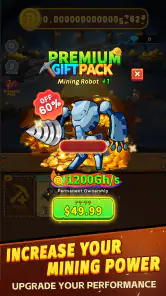
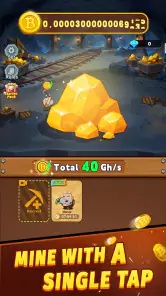
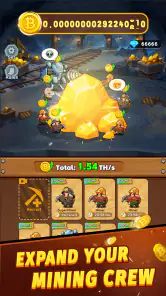
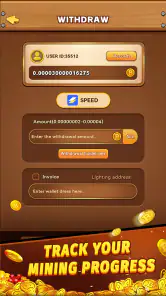


Analysis by Reviewed
I approached Bitcoin Miner - Gold Diggers as a casual game rather than as a serious way to earn cryptocurrency. Its central appeal is easy to understand: you mine BTC, expand an in-game empire, and keep returning to improve your progress. That sounds simple, but the experience depends heavily on how patiently you handle the early stages and how carefully you separate game progress from real-world financial expectations.
Developed by Alpha11 Limited, this free game sits in the casual category and is aimed at mature players aged 17 and over. It has attracted a 4.7 average from around 33 thousand ratings, with more than 100 thousand installs. Those figures suggest that the basic idea connects with a sizeable audience, but they do not remove the need to understand the trade-offs before installing it. The game includes optional purchases ranging from $9.99 to $699.99 per item, so the free entry point should not be confused with a completely cost-free experience for every kind of player.
Getting past the first points of friction
Why the opening can feel less clear than expected
The phrase “mine BTC” creates a strong expectation. Someone may open the game assuming that it works like a wallet, a mining utility, or a direct cryptocurrency service. I would not approach it that way. The useful mindset is to treat it as a progression game built around a Bitcoin theme. Your objective is to understand its in-game loop, make sensible upgrades, and decide how much attention you want to give it, not to use it as a substitute for a financial app.
That distinction is the first practical setup check. Before spending time on upgrades, I would confirm that the game is installed from the intended app source, that the device meets its minimum operating-system requirement of Android 7.1, and that there is enough free storage for normal app operation. These are ordinary checks, but they prevent a surprising amount of confusion when an installation stops, an update fails, or the game behaves inconsistently after being moved between devices.
The release date is listed as April 6, 2026, and the current version is 1.6.2. If the version shown on a device differs, I would check for an available update before trying more complicated fixes. A mismatch can make support advice unreliable, especially when a player is comparing screenshots or instructions from a different build. I would also restart the game completely after updating instead of assuming that an open session has refreshed every change.
What I would check before blaming the game
When a casual game appears stuck, the cause is often basic. I would first check whether the device has a stable internet connection, then close other demanding apps, reopen the game, and try again. A weak connection can make loading look like a gameplay problem, while low available memory can cause a session to close or return to an earlier screen. These checks are quick and do not risk changing progress.
I would be especially careful with interruptions during an important action. Switching rapidly between the game, a payment screen, messages, and other apps can leave a session in an unclear state. My safer routine would be to finish one action, wait for the next screen to appear, and only then leave the game. This is a small habit, but it matters more in a progression title where a player may be unsure whether an upgrade or reward has actually registered.
Another useful check is the device clock. I would leave automatic date and time enabled rather than changing the clock to influence waiting periods or progress. Even when a game does not visibly explain how time is handled, manual clock changes can create confusing results in apps that rely on online synchronization. If something suddenly looks out of order after changing the time, restoring the correct setting and restarting the game is a sensible first response.
A calmer way to learn the mining loop
I found the concept easier to judge when I ignored the cryptocurrency wording for a moment and focused on the rhythm of play. The question is not simply how quickly the number rises. I would watch what each improvement changes, whether an upgrade makes the next step easier to reach, and how often the game asks for attention. This turns the opening from a rush for the biggest visible result into a short experiment.
That approach also helps with a common mistake: spending too early because a large improvement looks attractive. In a casual management-style game, a cheaper improvement that keeps progress moving can be more satisfying than a costly purchase that leaves you waiting afterward. I would make one change at a time, observe the result, and keep a mental note of which actions actually reduce friction. This is more reliable than tapping through every available option simply because it is highlighted.
For a short everyday session, I would open the game during a commute break or while waiting for an appointment, review the current state, make one or two deliberate decisions, and close it normally. That routine is better suited to the title than leaving it open constantly and treating every moment as an obligation. It also gives you a clearer sense of whether the game fits your habits or merely encourages repetitive checking.
Recovering a disrupted workflow without making it worse
What to do when progress looks wrong
If the game returns to an earlier screen or appears not to remember a recent action, I would avoid immediately clearing its storage or reinstalling it. Those steps can remove local information and make recovery harder. First, I would reopen the game, allow the connection to settle, and check whether the previous action appears after a brief pause. If the problem remains, I would restart the device and try once more before taking any destructive action.
I would also record the situation in plain language: what I tapped, what I expected, what appeared instead, and whether the problem happened after an update or an interruption. That note is more useful than saying only that the game is broken. It helps distinguish a display delay from a missing transaction, a connection failure, or a repeatable crash. Since the developer is Alpha11 Limited, a clear report directed through the app’s normal support route would give the best chance of a useful response.
Payments deserve extra caution. Because optional in-app purchases can reach $699.99 per item, I would never tap a purchase button casually or assume that a visible price is the same as a confirmation. I would read the device’s payment prompt, check the selected account, and stop if anything looks unexpected. If a purchase seems to have failed, I would avoid repeating it immediately; checking the account’s transaction history first can prevent duplicate attempts.
How I would handle a session that keeps closing
For repeated crashes, I would work from the least disruptive fix to the most disruptive one. I would close background apps, restart the device, confirm that the operating system and the game are current, and make sure the device is not nearly full. I would then test the game without running several other apps at the same time. This sequence is practical because it addresses memory, storage, and software-version problems without immediately risking saved progress.
If the game works after a restart but fails during a particular action, I would repeat that action only after noting the conditions around it. Was the connection changing? Was another app opening? Did the screen turn off? Did the failure happen after a purchase prompt? A repeatable pattern is valuable evidence. Randomly reinstalling after every crash removes that evidence and may turn a small problem into a recovery problem.
I would treat battery-saving modes with some suspicion when the game behaves differently in the background or after the screen locks. Power management can restrict background activity in many mobile games, so testing once with the game open and the device adequately charged can clarify whether the issue is related to the phone rather than the title itself. I would not disable every security or battery feature permanently; I would use a temporary, controlled test instead.
Keeping expectations realistic about waiting and progress
Bitcoin-themed games often tempt players to measure every minute. I think that is the wrong way to enjoy this one. If progress feels slow, the first question should be whether the intended experience is a gradual casual loop rather than instant acceleration. Constantly checking the screen can make a harmless waiting period feel like a defect, even when the game is simply asking for patience.
My practical rule would be to set a small session boundary. Play for a few minutes, make decisions that are clearly available, and leave. If the game only feels rewarding when you spend money or check it repeatedly throughout the day, that is an important sign that it may not suit you. A casual game should fit around your routine, not dictate it.
When reinstalling becomes reasonable
Reinstallation should be a later step, not the first suggestion. Before using it, I would make sure I understand how progress is retained and whether the current account or device state can be restored. I would also take note of the current version and any visible player information. Without that preparation, reinstalling can create a fresh start that looks like a lost save.
If the game still fails after ordinary restarts and update checks, reinstalling may be reasonable, but I would do it only when I am comfortable with the possibility of losing local progress. I would also avoid installing modified versions or unofficial copies in an attempt to recover faster. For a game connected to a financial theme, unofficial software creates unnecessary security and trust concerns, even if the goal is only to restore gameplay.
Knowing when the phone or connection is the real problem
Separating a game issue from a device issue
A useful test is comparison. If other online apps are also slow, fail to load, or lose connection, I would investigate the network or device first. If only Bitcoin Miner - Gold Diggers has trouble while everything else works normally, the game becomes the more likely source. This simple comparison is more informative than repeatedly tapping the same button.
I would test on one reliable connection rather than switching rapidly between mobile data and Wi-Fi. Network changes can interrupt a session and make a normal loading delay look like lost progress. If the game behaves normally on one connection but not another, the problem may involve the router, signal quality, or network restrictions. Restarting the router and moving closer to it are sensible general checks; changing advanced network settings is usually unnecessary at the beginning.
Storage and heat are also easy to overlook. A phone with very little free space may struggle to update or maintain apps, while a hot device may reduce performance to protect itself. I would let the phone cool, close unnecessary apps, and free some storage before judging the game. If several unrelated apps crash, the device deserves attention rather than the game receiving all the blame.
Who will enjoy the game most
I think the best audience is someone who likes light progression, numbers that gradually improve, and a theme that gives ordinary upgrades a mining-and-empire flavor. It can work well as a brief distraction, especially for players who enjoy checking a project, making a small decision, and returning later. The free download makes it easy to try without committing money at the start.
It is less suitable for someone looking for a genuine cryptocurrency wallet, real mining hardware control, or dependable income. It is also a poor match for players who dislike waiting, repeated upgrade decisions, or the temptation of high-priced optional purchases. The mature rating is another reason I would not install it casually on a child’s device or assume that its audience is the same as that of every other simple casual game.
How it compares with ordinary casual alternatives
Compared with a puzzle game, this title offers less moment-to-moment problem solving and more satisfaction from watching a longer progression develop. Compared with a conventional idle game, its Bitcoin identity gives the loop a more specific theme, but it also creates more room for misunderstanding. A standard resource-management game is the better choice if you want a neutral setting without cryptocurrency associations.
Compared with a real finance or crypto app, this is the better choice only when your goal is entertainment. A finance app is designed around accounts, transactions, and financial information; this game is designed around play. Keeping those categories separate is not a minor technicality. It determines whether you will find the experience relaxing or feel disappointed that it does not behave like a financial service.
The biggest trade-off is focus. The Bitcoin theme makes the game immediately recognizable, while the same theme can encourage unrealistic expectations. I appreciated it more when I treated the mining language as atmosphere and progression design. If that mental separation feels artificial to you, a different casual game without financial terminology will probably be more comfortable.
My practical verdict after using it
Bitcoin Miner - Gold Diggers is a free casual game with an appealingly simple premise, but its value depends on your expectations. I would recommend trying it if you enjoy gradual progress, short sessions, and a themed management loop. I would not recommend it as a way to mine real BTC, replace a wallet, or justify spending beyond your entertainment budget.
The most important practical advice is to start slowly. Check the operating-system requirement, update to the current version when possible, use a stable connection, and learn the progression before considering any optional purchase. If a session fails, restart and observe the pattern before clearing storage or reinstalling. Those steps protect both your time and your progress.
Alpha11 Limited has positioned the game for a mature audience, and the broad rating response shows that many players enjoy its concept. Still, the optional purchase range means I would keep payment protections active and involve no one else’s account without permission. The game is easiest to recommend when it remains a small, controlled pastime rather than something that demands constant attention.
My final view is cautiously positive: it is worth trying for casual progression fans, not for cryptocurrency expectations. If you can enjoy the mining theme as a game mechanic, accept a slower rhythm, and ignore pressure to buy, it can provide a pleasant routine of brief check-ins. If you want transparent financial utility, deep strategy, or a completely pressure-free experience, I would choose a different kind of app instead.
Pros
- Simple gameplay is easy to understand within minutes.
- Mining upgrades provide a clear sense of progression.
- Short sessions suit quick breaks and casual play.
- Bright visuals make the mining areas easy to navigate.
- Playable without advanced gaming skills or experience.
Cons
- Progress can feel slow without frequent upgrades.
- Ads may interrupt the experience or appear during rewards.
- Limited gameplay variety may reduce long-term engagement.
- Some upgrades can require considerable in-game currency.
- Offline progress may be restricted or less rewarding.

- Category
- Casual
- Version
- 1.6.2