Bingo Abradoodle: Mobile Bingo
- 42.39K
- 4.7
- Installs
- 10.00M
- Price
- Free
Screenshots

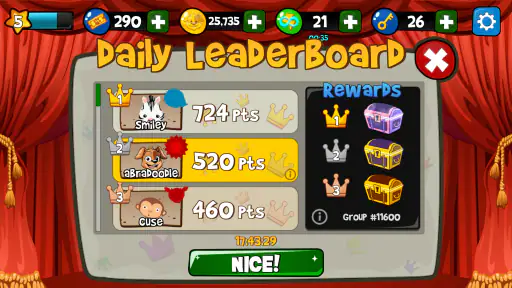
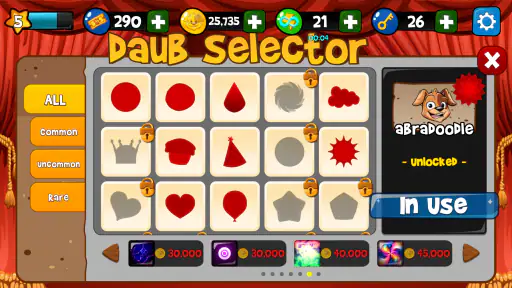
Analysis by Reviewed
I approached Bingo Abradoodle as a quick, low-pressure way to play bingo on a phone rather than as a demanding strategy game. That distinction matters. The appeal is the familiar rhythm of listening for called numbers, checking a card, and waiting for the pattern that completes a round. It is a casual game from Abradoodle Games - fun bingo games, and the presentation is clearly aimed at people who want an easy activity they can start without learning a complicated rule set.
The game is free to install and is suitable for Everyone, which makes it an approachable choice for a shared family tablet, a quiet break, or a few minutes of entertainment while waiting. It has reached over ten million installs and holds a 4.7 average from around 197 thousand ratings, so there is a substantial audience behind it. Those figures do not replace personal testing, but they do suggest that the basic format has connected with a wide range of players.
My first impression was that the main challenge is not understanding the rules. It is getting comfortable with the pace of a digital caller and making sure I am looking at the right part of the screen at the right time. Once that rhythm settles in, the game becomes pleasantly simple. The best reason to try it is its low learning curve, not deep tactical complexity.
Getting comfortable before the first round
Because the game is designed as a mobile bingo experience, I would not approach it expecting the same atmosphere as a physical bingo hall. There is no need to organize cards, find a marker, or keep track of a caller across a room. The phone handles the repetitive work, leaving me to concentrate on the card and the next number. That makes it convenient, but it also removes some of the social energy that makes in-person bingo memorable.
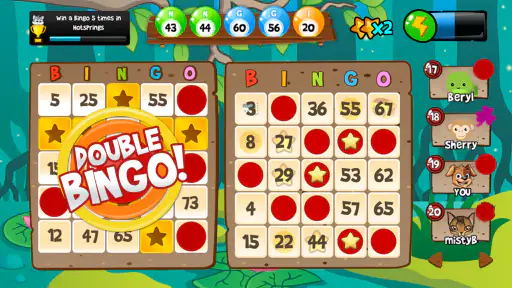
The first launch is best treated as an orientation period. I would take a moment to identify where the current call appears, where the card is displayed, and how marked numbers are shown. New players often rush because bingo feels familiar, then miss the important visual cues. A slower first round is more useful than trying to win immediately. The goal is to understand the screen well enough that checking a number becomes automatic.
The game is available for devices running Android 6.0 or later, and its current version is 4700. For a first-time player, the practical point is simple: check compatibility before spending time setting it up, especially if the game is intended for an older phone or tablet. Once it opens properly, there should be no reason to overthink the installation. It is a casual title, so I would start with the default experience and learn by playing rather than searching for advanced explanations.
One small habit helped me immediately: I kept the phone at a comfortable viewing angle and avoided switching between applications during a round. Bingo depends on attention more than fast reflexes. If a call appears while I am distracted, the problem is not that the game is difficult; it is that a missed number can make the rest of the card harder to follow. A stable position also makes it easier to compare the called number with the card without accidentally tapping the wrong area.
For someone introducing the game to a child or an older relative, I would demonstrate one complete call instead of explaining every possibility in advance. Show the number, find it on the card, and let the player see what changes. That approach makes the interface less intimidating. The Everyone rating supports its broad accessibility, but accessibility in practice still depends on screen size, eyesight, and how comfortable the player is with touch controls.
Turning the first round into a clear success
A meaningful first success does not have to be a win. For me, it is the moment when I can follow several calls in a row without pausing to ask what changed. That is the point where the game stops feeling like an unfamiliar app and starts feeling like bingo. I recommend focusing on accurate marking and steady attention rather than trying to predict the result.
When a number is called, I check the card methodically instead of scanning randomly. I begin at one side and move across the rows, or I use the visual grouping of the card if that is easier. This may sound slower, but it reduces the chance of overlooking a matching number. After a few calls, the process becomes quicker because I recognize the layout and stop searching every square with equal intensity.
Another useful approach is to let the game teach its own pace. I do not tap repeatedly when I think I have found a match, and I avoid assuming that a highlighted square means the round is nearly over. A marked number is only one step in the pattern. The more reliable workflow is to confirm the call, mark the matching space, then return my attention to the caller. That prevents excitement from turning into mistakes.
If I were helping a first-time player, I would say: listen first, mark second, celebrate later. The phrase sounds obvious, but it addresses the most common beginner error—looking only at the card and missing the next call. Bingo is not a game where constant tapping creates an advantage. Its satisfaction comes from keeping up and noticing when the card begins to take shape.
The game works particularly well in short everyday situations. I can imagine using it during a coffee break, playing a round while a television program is on in the background, or handing it to a family member who wants something familiar but does not want a complex puzzle. It is also a reasonable choice for a relaxed shared session where players take turns holding the device. The important limitation is that the experience remains centered on one screen, so it is not a substitute for a genuinely social multiplayer gathering.
Where new players may hesitate
The word “bingo” can create expectations that do not always match a mobile adaptation. Some players may expect a live room, conversation with strangers, or the atmosphere of a community hall. I would not choose this game primarily for those things. Its strength is the self-contained activity: open it, follow the calls, and enjoy the anticipation of completing a card.
Another possible source of confusion is the difference between a free download and a completely cost-free experience. The game is free, but in-app purchases range from $0.99 to $99.99 per item. I would keep that in mind before handing the phone to a child or allowing someone unfamiliar with mobile games to play without supervision. The sensible first step is to enjoy the basic game before considering any optional spending. A purchase should solve a specific personal preference, not be treated as necessary for learning the rules.
This is also where the game may not suit everyone. If I want a title with a strong campaign, elaborate character development, or a demanding competitive ladder, this is the wrong direction. Its casual classification is an honest description of the experience. The pleasure comes from repetition, anticipation, and small moments of progress, not from mastering a large system.
Players who dislike waiting may find the caller-led format slow, particularly if they prefer action games or puzzles with constant input. Bingo asks for attention without requiring much physical interaction. That can be relaxing after a busy day, but it can also feel passive if I am looking for a more energetic challenge. In that situation, a fast arcade game or a timed puzzle would probably be a better alternative.
I also would not use it as my only option for a group event. A physical bingo set is better when the goal is conversation, shared laughter, and a visible communal activity. A broader online bingo service may be preferable for players specifically seeking live rooms or social interaction. Bingo Abradoodle makes more sense when convenience and simplicity matter more than the surrounding event.
Practical habits that make the game easier
My first concrete tip is to play the opening round as a familiarization round, even if I already know bingo. I pay attention to the relationship between the caller and the card, notice how marked spaces look, and learn what signals that a round has progressed. This avoids the common mistake of treating the first game as a test. The real test is whether the interface becomes comfortable.
My second tip is to choose the right environment. A bright screen in a noisy room can make a simple game surprisingly tiring. I get a better experience when the phone is close enough to read comfortably and notifications are not pulling my attention away. This is especially useful for older players, who may enjoy the rules but need more time to distinguish calls from other screen elements.
Third, I would avoid making a purchase during the excitement of a near-win. The game’s free entry is enough to judge whether its pace suits me. If I continue playing, I can make a calmer decision later about whether an optional item adds value. This is a better workflow than assuming that spending will make the basic experience more enjoyable.
A fourth insight is that the game can work as a gentle attention exercise, but only within limits. Following calls and checking a card encourages sustained concentration, which is useful during a short break. It should not be presented as a formal training tool or a substitute for anything else. I see it as a pleasant way to occupy the mind, not as a measurable cognitive program.
Finally, I would keep expectations consistent when sharing the game with someone else. If one player wants a quiet, predictable activity and another wants a competitive contest, the session may disappoint both. It is better suited to taking turns, comparing progress casually, or simply letting one person play while others watch. That small adjustment makes the social use case feel natural instead of forcing the app to behave like a party game.
How it compares with familiar bingo alternatives
Compared with paper bingo, the mobile version is more convenient and less messy. I do not need a supply of cards or a separate caller, and the phone keeps the action in one place. Paper still wins when several people want to play around a table, because everyone can see the shared activity and talk between calls. The choice depends less on the rules than on whether I value portability or social presence.
Compared with larger online bingo services, this game feels more approachable for a first attempt. A service built around live communities may offer more interaction, but it can also bring more menus, profiles, events, or distractions. Bingo Abradoodle is a better starting point when I want to understand the basic loop without committing to a larger platform. On the other hand, a social player may quickly outgrow its self-contained feel.
Compared with solitaire or simple match-three games, bingo offers less control over the immediate outcome. I cannot usually solve a difficult position through a clever move; I follow the calls and hope the card develops favorably. That uncertainty is the source of its charm, but it also means players who want agency in every turn may prefer a puzzle game. I enjoy it most when I am happy to let anticipation do the work.
The large audience and strong average rating indicate that the format has broad appeal, while the developer’s focus on fun bingo games gives the title a clear identity. Still, popularity does not make it universally suitable. I would recommend it to someone who wants familiar rules, a gentle pace, and a quick way to fill spare time. I would hesitate to recommend it to someone who needs deep progression, rich social features, or complete freedom from optional purchase prompts.
Who should install it, and what to do next
After the first successful round, I would resist the temptation to judge the entire game by whether I won. The more useful question is whether the process felt comfortable: could I hear or recognize the call, locate it on the card, and stay engaged until the end? If yes, the game has probably found its audience in me. If the rhythm already feels repetitive, more rounds are unlikely to transform it into a strategy title.
For a first-time user, my suggested path is straightforward. Install it on a compatible device, open one round without spending money, learn the caller-and-card relationship, and then decide whether the pace fits the way you normally use your phone. If it becomes a regular break-time activity, set a personal limit for optional purchases and keep the focus on the game’s simple loop. That keeps the experience predictable and avoids turning casual entertainment into an unnecessary expense.
The title was released on September 28, 2017, and its current version is 4700, which places it well beyond the novelty stage. It has had time to establish itself as a recognizable mobile bingo option, but its core appeal remains uncomplicated. I do not open it expecting constant surprises. I open it when I want a familiar pattern, a little suspense, and an activity that does not demand a long tutorial.
My final recommendation is positive, with a clear qualification. Bingo Abradoodle is a good fit for relaxed, accessible bingo sessions, especially when convenience matters more than social depth. It is free to begin, suitable for a broad age range, and easy to understand once the first few calls make sense. Just remember that its simplicity is both its strength and its boundary: players seeking richer strategy, live community play, or a highly interactive challenge should look elsewhere. For everyone else, it offers a reassuringly gentle route from installation to that first satisfying completed pattern.
Pros
- Simple bingo gameplay that is easy for beginners to understand.
- Bright
- playful artwork gives the game a cheerful personality.
- Quick rounds make it convenient for short gaming sessions.
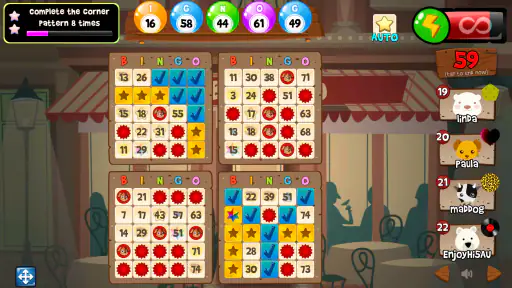
- Multiple bingo cards can add extra challenge for experienced players.
- Suitable for casual play without requiring advanced gaming skills.
Cons
- Progress may feel repetitive after extended play sessions.
- Random outcomes can make winning feel dependent on luck.
- Small screens may make some visual details harder to follow.
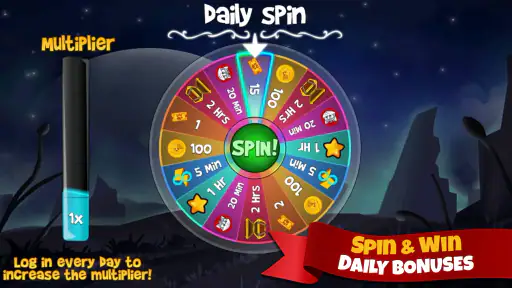
- In-game rewards may require patience or repeated play to collect.
- Players looking for competitive multiplayer may find it limited.
- Category
- Casual
- Version
- 4700