Backspin Games: Earn Money
- 1.63K
- 4.5
- Installs
- 500.00K
- Price
- Free

Screenshots



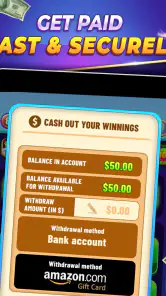




Analysis by Reviewed
I went into Backspin Games: Earn Money expecting a light casual game with a financial hook, and that is still the most accurate way to describe it. It is a free game from Backspin Games SL built around playing against real opponents, with the possibility of earning extra cash through those matches. That promise makes it more interesting than an ordinary time-killer, but it also means I judge it differently: the entertainment matters, yet so do the competitive pressure, the mature audience, and the way real rewards can change the feel of a simple game.
My overall view is positive but measured. The game is easiest to appreciate when I treat it as a short competitive diversion rather than a dependable income source. It gives casual players a reason to focus, and the presence of real opponents can make each round feel more meaningful than playing against a predictable computer. At the same time, anyone who dislikes pressure, loses interest when money enters a game, or expects a guaranteed return should probably choose a conventional casual title instead.
What the competitive format gets right
The clearest strength is the shift from passive play to direct competition. In many casual games, I can repeat the same activity without feeling that the result matters beyond a score or a progress bar. Here, playing against another person creates a stronger sense of occasion. Even a short session can feel like a small contest rather than another automatic swipe through a familiar routine.
That difference is especially useful during brief breaks. I can imagine opening it while waiting for an appointment or taking a short pause between tasks, playing one focused match, and closing it without committing to a long campaign. The format suits people who want a quick challenge with a clear result instead of a large world, a lengthy story, or a complicated collection system.
The real-opponent angle also gives the game a human unpredictability that ordinary casual alternatives often lack. A computer-controlled rival can be tuned to a difficulty level, but a human opponent may make an unexpected choice or perform inconsistently. That uncertainty is the main reason I would return to this game rather than simply installing another endless puzzle or arcade title.
There is also a useful psychological distinction between playing for a high score and playing for a reward. A high score is easy to ignore; a potential cash outcome makes me pay closer attention to the rules and my decisions. That can make a small game more engaging, but it is a double-edged feature. The same tension that creates focus can make a disappointing result feel more personal than a normal loss.
I would not describe this as a replacement for work or a serious money-making method. The sensible way to approach it is as entertainment first, with the reward element acting as an extra incentive. That mindset keeps the experience healthier and prevents the common mistake of measuring every session only by what it might return.
A better way to approach each session
My practical advice is to decide before opening the game what you want from that session. If I am looking for a quick competitive break, I can concentrate on the match and accept the result. If I am tired, distracted, or already irritated by a previous loss, I am better off stopping rather than chasing a better outcome immediately. That simple pause is more important here than in a standard casual game because the reward premise can encourage impulsive replay.
I would also read the in-game rules carefully before treating any match as meaningful. A player should understand how a contest works, what counts as success, and how any reward process is presented. Skipping those details is a poor strategy in a game where the result may have more significance than a virtual badge. This is one of the less obvious differences between Backspin Games and a typical free puzzle app: attention to the conditions is part of playing well.
Another useful habit is to separate performance from spending decisions. I would never let a losing streak decide whether to continue, and I would avoid treating a potential reward as money already earned. That approach does not make the game less fun; it keeps the competitive element in proportion and makes it easier to stop at the right time.
Why the audience response matters
The game has an average rating of 4.5 from around 9,000 ratings, alongside roughly 1,600 written reviews. It has also passed 500,000 installs, which suggests that the concept has reached a substantial audience rather than remaining a niche experiment. Those figures do not guarantee that every player will enjoy the format, but they do support my impression that the central idea is easy to understand and appealing to many casual competitors.
What I find more important than the raw popularity is the reason someone might choose it. Players who enjoy a clear opponent, a short session, and an added sense of consequence have a specific reason to try it. Players who only want relaxing entertainment may find that the same competitive structure works against them. The game’s appeal depends less on how much content a person wants and more on whether they enjoy pressure in small doses.
Where the reward angle creates friction
The biggest limitation is not a missing feature; it is the expectation created by the title and concept. “Earn Money” can sound like a straightforward promise of easy income, while the actual experience should be approached as competitive entertainment with a possible reward component. That difference matters. Anyone installing it primarily to make dependable cash is likely to be disappointed by the uncertainty built into competing against other players.
Real-opponent competition also means that a player’s experience can vary from session to session. A match may feel fair and exciting one time, then frustrating the next if the result goes against you. In a normal casual game, I can often lower the difficulty, replay a level, or continue at my own pace. A competitive reward-focused format offers less emotional control because another person is part of the outcome.
That makes the game a weaker choice for children and younger teenagers. Its content rating is Mature 17+, so I would treat that as a firm audience signal rather than an incidental label. Adults who are comfortable with competitive play and reward-related stakes are the natural audience; families looking for a harmless game to share with younger players should look elsewhere.
There is a second kind of friction: the free price may make the first download feel risk-free, but “free” does not automatically mean effortless or consequence-free. I would still approach the reward mechanics with the same care I would use for any activity involving competition and money. Before committing time, I would check the rules presented inside the game and make sure the arrangement fits my own boundaries.
This is also where Backspin Games differs from the usual alternatives in the casual category. A standard free puzzle, card game, or arcade app usually asks for attention in exchange for amusement. This game asks for attention while adding the possibility of a financial outcome. That can make a short session more compelling, but it can also make it harder to regard a loss as meaningless. If relaxation is the main goal, the ordinary alternative is probably better.
Who should install it, and who should skip it
I think it is a good fit for adults who enjoy quick head-to-head challenges and want more tension than a solo casual game provides. It is particularly suitable for someone who likes to test concentration in short bursts, accepts that results will vary, and sees any reward as a bonus rather than a planned source of income. The game’s free entry makes it easy to explore that style without first buying a conventional premium title.
I would recommend skipping it if you are looking for a calm game to play before sleep, a long-form adventure, or a reliable way to supplement your finances. It is also a poor match for players who dislike losing to strangers, feel tempted to chase a bad result, or prefer complete control over the pace of play. In those cases, a solo casual game with no reward pressure will probably provide a better experience.
One realistic scenario shows the distinction clearly. Imagine having ten minutes during a lunch break. If you want a focused contest and can leave the result behind when the break ends, this game may fit nicely. If you are already stressed and need something soothing, a simple offline puzzle or relaxed matching game would be the wiser choice. The same short session can feel energizing or aggravating depending on what you need at that moment.
I would also be cautious about recommending it to a friend who tends to turn every game into a competition. The reward angle can amplify that habit. For a naturally measured player, it may add welcome purpose; for someone who keeps replaying until a loss is corrected, it may encourage an unhealthy loop. That is not a criticism of every session, but it is an important audience distinction.
Practical details before you try it
Backspin Games SL released the game on May 8, 2025, and the current version is 1.3.3. It supports Android 7.0 and later, so people using older compatible Android phones should have a reasonable starting point from the operating-system side. I would still keep the app updated, especially for a competitive game where changes to matchmaking, stability, or reward handling can affect the experience.
The game is free to install, which removes the usual upfront purchase decision. That makes trying it straightforward, but I would not confuse a free download with a guaranteed benefit. The important decision comes after installation: whether the competitive reward format is enjoyable and comfortable for you. If it is not, the lack of an initial price does not make the time investment worthwhile.
The Mature 17+ rating is another detail I would consider before installing it on a shared device. I would not hand it to a younger family member simply because it looks casual. The category describes the style of play, not the full suitability for every age group, and the reward-focused premise is enough reason for an adult to make the decision deliberately.
For a first session, I would take a low-pressure approach. Learn the flow, observe how opponents affect the pace, and pay attention to the conditions attached to a match before trying to optimize results. This is more useful than immediately chasing the most attractive possible outcome. It lets you discover whether the underlying game is fun on its own, which is the best test of whether it deserves a place on your phone.
My verdict on Backspin Games: Earn Money
After looking at what makes it distinctive and what can make it uncomfortable, I see Backspin Games: Earn Money as a focused casual competition rather than a financial tool. Its strongest quality is the way real opponents give short sessions more purpose. Its most important weakness is that the possibility of cash can raise expectations and make ordinary losses feel heavier than they would in a conventional game.
I would recommend it to an adult who enjoys brief competitive matches, understands that rewards are not the same as dependable income, and can set a clear stopping point. I would not recommend it to children, players seeking quiet relaxation, or anyone likely to chase results after a frustrating loss. Those readers will be better served by a traditional solo casual game without financial pressure.
The combination of a 4.5 average, a growing audience, and a free starting point makes it reasonable to try if the concept genuinely appeals to you. My advice is to judge it in two stages: first ask whether the match itself is enjoyable, then decide whether the reward element improves that enjoyment or distracts from it. The right reason to play is the competition, with any extra reward treated as a bonus rather than a promise.
In the end, this is a specialized take on casual gaming. It is more engaging than a routine solo diversion for the right player, but less relaxing and less predictable than the usual alternatives. If that trade-off sounds appealing, Backspin Games SL has created a game worth exploring. If you want guaranteed calm, guaranteed progress, or guaranteed earnings, I would choose something else.
Pros
- Simple spin-based gameplay is easy to understand and start playing.
- Short sessions make it convenient for quick entertainment breaks.
- Reward progress can encourage regular daily participation.
- Lightweight design should work well on many Android devices.
- No advanced gaming skills are needed to begin earning points.
Cons
- Rewards may require substantial time or spins to reach withdrawal limits.
- Earning potential is unlikely to replace regular income.
- Availability of tasks and rewards may vary by location.
- Frequent ads can interrupt gameplay and reduce the overall enjoyment.
- Withdrawal rules and eligibility requirements may limit cash-out options.

- Category
- Casual
- Version
- 1.3.3