Animal Hunter : Wild Sniper
- 3.54K
- 4.8
- Installs
- 1.00M
- Price
- Free

Screenshots
Analysis by Reviewed
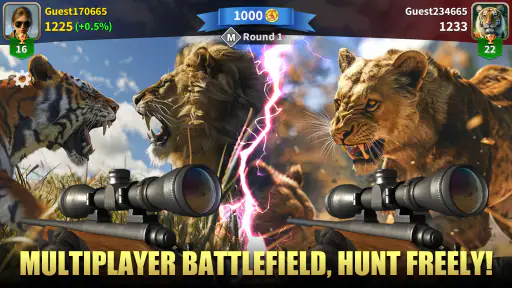
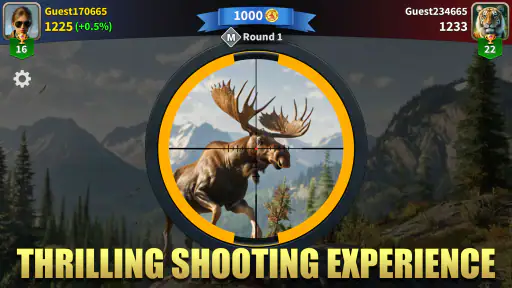
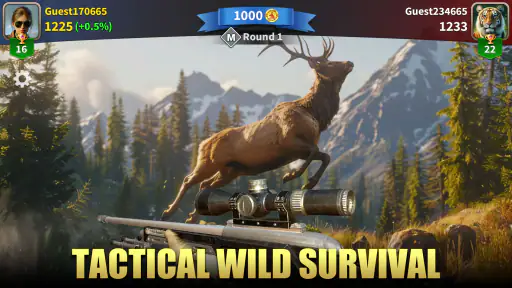
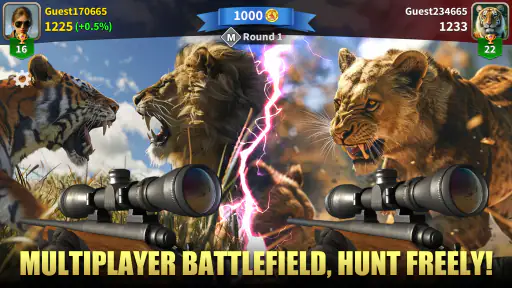
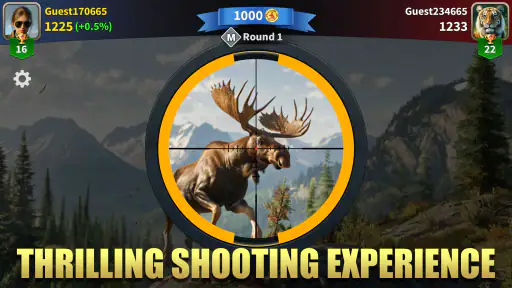
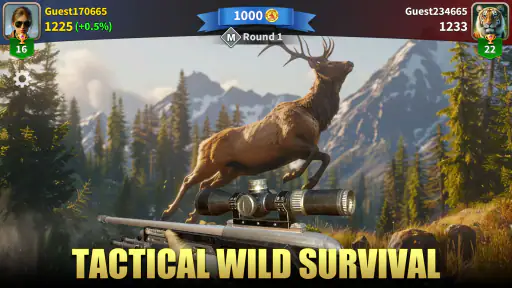
I approached Animal Hunter: Wild Sniper as a quick, competitive mobile game rather than a full hunting simulation, and that distinction matters from the first minute. Its basic idea is easy to understand: two players face each other in an animal-hunting contest, with the aim of making the better shot. The short matches make it approachable, while the animal targets and sniper presentation give it a little more personality than a typical reflex game.
The game is free to install, belongs to the casual category, and is aimed at Teen players. It was released on October 26, 2024, by Counter Terriost. On Android, it runs from version 6.0 onward, so it is accessible to many older devices as well as newer phones. The current version is 1.2.97, and its average score sits at 4.8 from around 32 thousand ratings, with more than a million installs. Those figures suggest that the simple head-to-head format has found a sizeable audience, but I still think the right expectations are more important than popularity here.
What the first match feels like
The strongest part of the concept is its focus. You are not asked to learn a large map, manage a complicated inventory, or remember a long list of abilities before playing. The attraction is the moment of lining up a shot and trying to perform better than the opponent. That makes it suitable for short breaks, especially when I want something more active than a puzzle but less demanding than a long action game.
The “1v1” structure also changes the mood compared with ordinary casual hunting games. A traditional hunting title often lets me explore at my own pace, repeat a level, and concentrate on collecting or improving equipment. Here, the competitive framing makes every shot feel like a small test. Even when a round is brief, I am watching my timing and accuracy because another player is part of the result.
That simplicity is both the game’s appeal and its main limitation. If you want a deep hunting experience with realistic tracking, extensive environments, or a story campaign, this is unlikely to replace a larger simulation. If you want a compact contest that can be understood quickly, the design makes much more sense. I would describe it as a casual sniper challenge with an animal theme, not as a detailed wildlife simulator.
One useful mindset is to treat each round as practice in controlled reactions rather than as a test of long-term planning. The first meaningful success is not necessarily winning several matches in a row. It is learning to stay calm, identify the target, and make one deliberate shot instead of rushing because the opponent is present.
Who will enjoy it most
I think the game is best suited to players who like short competitive encounters and visible improvement in a single skill. Someone who enjoys testing reaction speed, accuracy, and decision-making without reading a lengthy tutorial should feel comfortable here. It can also work for a player who normally avoids large multiplayer games because those games demand too much time or too many controls.
It is less suitable for anyone looking for an offline-style relaxation game where failure has little emotional weight. The head-to-head setup naturally adds pressure, even if the controls are simple. Players who dislike repeating similar actions to improve their timing may also find the experience narrow after the initial novelty fades.
The Teen content rating is worth taking seriously when choosing it for a younger player. The animal-hunting theme and competitive presentation are not the same as a harmless coloring or matching game, so I would not select it solely because it appears in the casual category. The category describes the accessible style, not the tone of every moment.
Getting through the first setup
Starting with a small goal makes the opening much less confusing. I would install the game, allow it to finish preparing its current version, and then spend the first session learning the aiming behavior before worrying about purchases or long-term progress. The game is free, but individual in-app purchases range from $0.99 to $99.99, so there is no reason to rush into spending while the basic controls are still unfamiliar.
My practical advice is to begin with a stable grip and avoid playing while walking or multitasking. A sniper-style game rewards small, controlled movements, and a loose grip can make a simple target feel harder than it is. I also prefer to play a few attempts in the same posture. That gives me a fairer sense of whether I am improving or merely changing how I hold the phone.
Do not judge the entire experience from a single missed shot. Early misses can come from unfamiliarity with the aiming response, a rushed tap, or simply looking at the opponent’s result instead of concentrating on the target. The useful first-session question is not “Why did I lose?” but “What exactly happened before I tapped?” That small change turns the opening into a learning process.
Because the game is designed around a direct contest, I would also avoid treating every early round as a ranking statement. A first-time player has not yet developed a reliable rhythm. The better approach is to notice whether the reticle feels predictable, whether targets are easy to recognize, and whether the match length fits the way you normally play mobile games.
How to reach the first meaningful success
For me, the first real breakthrough in a game like this comes from slowing down just enough to separate aiming from firing. I first place my attention on the target, then make the smallest adjustment needed, and only then tap. Rushing both actions together creates a vague sense of failure because I cannot tell whether the problem was positioning or timing.
A second useful habit is to use the opening attempts as calibration. I watch how much the aim moves when I make a short swipe or adjustment, then repeat that movement rather than making a large correction each time. This is more reliable than constantly dragging across the screen in search of the perfect position. The goal is consistency, not dramatic speed.
When facing another player, it is tempting to copy the pace of the opponent. I have found that this is usually a mistake for beginners. Their quick action may be confident, or it may simply be rushed. My better strategy is to keep the same deliberate routine regardless of what appears on the other side. That protects accuracy and makes each result easier to understand.
The most useful early skill is repeatable control, not fast tapping. A player who can make the same careful adjustment several times has a better foundation than someone who occasionally makes a spectacular shot but cannot reproduce it. This is an important trade-off in a casual competitive game: speed looks impressive, but consistency is what makes the experience satisfying.
Once I can complete a round without feeling lost, I start looking for patterns in my mistakes. Am I firing before the target is centered? Am I overcorrecting after a small movement? Am I paying more attention to the result than to the next opportunity? These questions are more valuable than simply playing another match immediately, because they turn repetition into targeted practice.
Common points of confusion
The biggest possible misunderstanding is assuming that the animal theme means the game will play like a broad exploration adventure. The store summary presents it as a 1v1 animal-hunting game, and that competitive wording should guide expectations. The core appeal is the contest between two players, not roaming through a large wilderness or managing a detailed expedition.
Another source of confusion is the difference between a free download and a completely purchase-free experience. You can start without paying, but the game includes optional items priced from $0.99 to $99.99 each. I recommend treating those purchases as something to evaluate only after understanding how much you actually enjoy the central match loop. Spending early can hide whether your improvement comes from practice or from an item.
The Teen rating can also be overlooked because the game is labeled casual. I would explain the hunting premise before handing it to a younger child, particularly if they expect a gentle animal game. The rating is a reminder to consider the theme and presentation, not just the size of the download or the simplicity of the controls.
Players may also wonder whether an older phone can handle it. Android support begins with version 6.0, which gives the game a broad compatibility range. Still, compatibility does not guarantee that every device will feel equally comfortable for precise aiming. Screen responsiveness, performance, and the physical condition of the phone can all affect a game where a small movement matters.
One more practical question is whether the game is a good substitute for a conventional shooting game. In my view, only partly. It offers a focused target-and-shot challenge, but it should not be approached as a replacement for a larger action title with extensive weapons, maps, missions, and progression. Its strength is concentration in a small package, not breadth.
Using the short format well
The best everyday use case is a short break when I have enough attention for a contest but not enough time for a long session. For example, I might play a few rounds after finishing a task, using the first attempt to settle in and the next ones to work on one specific weakness. That feels more rewarding than opening the game without a plan and repeating matches mechanically.
I also think it can work as a light competitive game between friends who want quick challenges. The format is easier to explain than a complex team game, and the animal-hunting theme gives the contest a clear identity. However, anyone expecting social depth, cooperative roles, or a large community system should choose a game built around those features instead.
A less obvious benefit is that the focused design makes self-coaching possible. I can create a simple rule for a session, such as never firing during the first impulse to rush, and then judge whether that rule improves my results. This kind of personal experiment is more useful than blindly chasing wins. It also keeps the game interesting when the novelty of the theme has started to settle.
There is a trade-off here. A narrow loop is easy to enter but may become repetitive for players who need constant variety. Larger casual alternatives often offer puzzles, collection systems, story chapters, or several modes to break up repetition. Animal Hunter: Wild Sniper is the better choice when I want one clearly defined skill challenge; another casual game is probably better when I want a broader menu of activities.
Purchases, patience, and progression choices
Since the game is free to play and offers in-app purchases, I would set a personal spending boundary before becoming invested in winning. The wide price range means that a small optional purchase and a much larger one are both part of the same store environment. That does not automatically make the game unsuitable, but it does make deliberate decision-making important.
My recommendation is to wait until I have played enough to answer three questions: Do I enjoy the basic aiming? Do I return because the matches are fun rather than because I dislike losing? And does a purchase improve enjoyment, or merely reduce the patience required to practice? If the answer to the last question is the second one, I would keep playing for free or move on.
This is also where the game differs from a purely single-player casual title. In a solo puzzle, an optional purchase may mainly affect convenience. In a competitive hunting contest, anything that changes how quickly I can progress or perform can influence how fair the match feels to me. I would therefore judge purchases not only by their price but by how they affect the reason I installed the game in the first place.
Where it fits among casual alternatives
Compared with a relaxing animal game, this one asks for more concentration and gives the target more importance than the surrounding theme. Compared with a full sniper game, it is easier to pick up and less intimidating, but it also offers a smaller scope. Compared with reflex arcade games, the 1v1 structure gives each attempt more personal pressure because the result is framed as a direct comparison.
That middle position is the reason I can recommend it selectively. It is not trying to be a long adventure, and I would not criticize it for lacking the scale of one. The fair comparison is with other quick competitive casual games. Against those, its clear animal-hunting identity and simple objective are strengths, while the focused loop may feel limited to players who need frequent changes of pace.
Players who should skip it are those who want a calm, noncompetitive experience, a detailed simulation, or a deep story. I would also skip it if I knew I was likely to spend impulsively in a game where I had not yet decided whether the main action was enjoyable. On the other hand, players who like brief accuracy challenges and do not mind repeating a focused activity have a reasonable chance of finding it engaging.
My recommendation after settling in
After the first successful rounds, I would keep the next step simple: choose one improvement target and play with that target in mind. Better control, calmer timing, and more consistent target recognition are all worthwhile goals. Trying to fix everything at once makes a compact game feel unnecessarily stressful.
I would also keep sessions short enough that concentration remains useful. When every attempt starts to feel automatic, taking a break is more productive than forcing another match. This is especially true for a game built around precision, because tired hands and impatient decisions can make the experience seem worse than it really is.
My honest recommendation is to try it as a focused, free casual challenge, not as a complete hunting simulation. The game has a clear entry point, a competitive hook, and enough simplicity for a first-time player to reach a meaningful success without studying complicated systems. Its limitations are equally clear: the central action may become repetitive, the Teen theme will not suit everyone, and optional purchases require restraint.
For the right player, that narrow focus is exactly the attraction. I can open it for a short contest, work on one precise skill, and leave without committing to a long campaign. For someone seeking exploration, rich progression, or a peaceful animal-themed experience, another option will be a better fit. As a free download from Counter Terriost, though, it is easy to test on a compatible Android device and make that decision through play rather than guesswork.
Pros
- Simple controls make aiming and shooting easy for beginners.
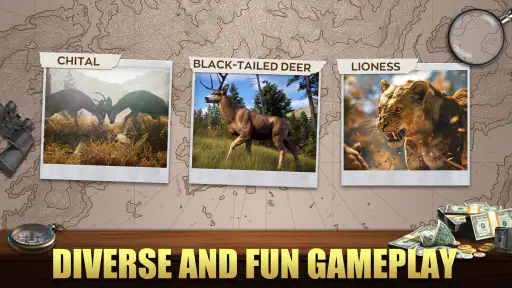
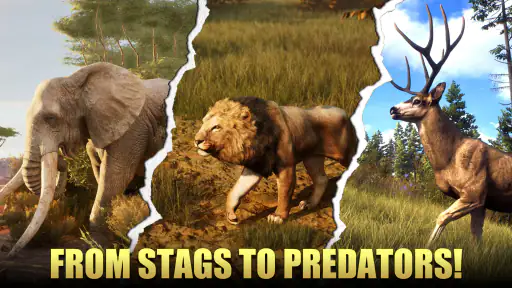
- Wide range of animals and environments keeps hunts varied.
- Offline play lets you hunt without a constant internet connection.
- Short missions are convenient for quick gaming sessions.
- Upgrades provide useful improvements to weapons and hunting gear.
Cons
- Some levels can feel repetitive after extended play.
- Energy or mission limits may interrupt longer hunting sessions.
- Ads can appear frequently between missions.
- Later weapons and upgrades may require significant grinding.
- Graphics and animations look basic on older or larger screens.
- Category
- Casual
- Version
- 1.2.97