Aesthetic - Decorate & Design
- 163.00
- 4.7
- Installs
- 10.00K
- Price
- Free

Screenshots
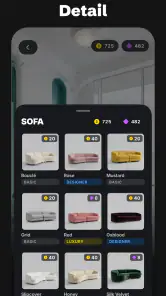
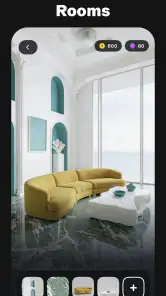

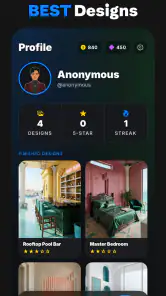

Analysis by Reviewed
I spent time with Aesthetic - Decorate & Design as a relaxed room-design game, and my first impression was that it understands the appeal of making a space look good without turning the experience into a complicated building simulator. The central idea is simple: decorate rooms, submit your choices, and see how your style stands against other players. That makes it easy to pick up for a short break, while still giving each room enough creative tension to make the result feel personal.
It is a free casual game from Fliq Lab, rated for Everyone, and it has a 4.7 average from around 1.7 thousand ratings. That combination suggests a healthy reception, but I would not treat the rating alone as a reason to install it. The more important question is whether you enjoy visual decision-making, small design trade-offs, and competition where taste matters as much as speed.
What I like most is that the game gives decorating a clear purpose. I am not simply placing furniture in an empty room for my own satisfaction; I am making choices with a visual target in mind and then entering a broader contest. That extra layer changes how I play. A bold choice may be attractive to me, but a safer arrangement may fit the brief better. The game works best when you enjoy that balance between self-expression and reading the room.
How the decorating loop feels in everyday play
The basic appeal is immediately understandable. I look at a room, consider the style I want to create, and make a series of visual choices until the space feels complete. The store summary describes designing stunning rooms, competing worldwide, and climbing the ranks, but in practice the enjoyment comes from the small decisions between those broad goals. A color that seemed perfect at first can overpower the rest of the room, while a modest accent can make the whole arrangement feel more finished.
I found it useful to approach each design in two passes. First, I decide on the room’s main mood: calm, bright, dramatic, warm, or something more restrained. Then I check whether every later choice supports that mood. This prevents the common mistake of selecting attractive items individually while ending up with a room that feels visually confused. It is a simple habit, but it makes the competitive side much more manageable.
The game is especially suitable for short sessions. I can open it when I have a few minutes, make progress on a room, and stop without needing to commit to a long campaign. That makes it a better fit for casual players than a large construction game that expects extensive planning, resource management, or constant attention. If you like arranging colors and furniture but do not want to learn a complex interface, this is the kind of experience that feels approachable.
A realistic everyday use case is an evening when I want something interactive but not stressful. I might play after work, complete a design, and compare the result with other entries before moving on. The competitive element gives the session a sense of closure: I have made something, submitted it, and received a reason to think about what worked. It is more engaging than scrolling through inspiration images, but less demanding than a strategy game that requires continuous concentration.
That simplicity also creates a limitation. Players looking for deep architectural control may find the experience too focused on presentation rather than construction. This is not the place I would choose for planning floor layouts, experimenting with structural changes, or managing a detailed virtual home. Its strength is the visual challenge of finishing a room, not the technical simulation of interior design.
Small choices matter more than expensive-looking choices
One of the more useful lessons I took from playing is that a room does not automatically improve when every item looks impressive. Strong pieces can compete with one another, particularly when they share similar visual weight. I get better results by choosing one focal point and allowing the surrounding elements to support it. This approach also helps when I am working quickly, because I do not waste time trying to make every corner equally dramatic.
I also recommend checking the room from a distance before finalizing it. Up close, a decorative item may look appealing, but the overall composition can become unbalanced when viewed as one image. Looking at the complete room helps me notice whether the colors are distributed evenly and whether the main feature still attracts attention. That is a practical workflow that is easy to overlook when the interface presents choices one at a time.
Another useful tactic is to avoid changing everything at once. If a design feels wrong, I adjust the largest visual element first, then reassess the smaller details. Replacing several pieces together makes it difficult to understand what actually improved the room. Treating each revision as a controlled experiment turns decorating into a more thoughtful process and reduces the urge to restart whenever the first attempt is not perfect.
Progress feels connected to taste, not only completion
The ranking structure gives the game a reason to keep returning. Climbing is not just about finishing more rooms; it is also about learning which combinations produce a coherent result. I enjoy that because it rewards observation. After a disappointing outcome, I can ask whether the problem was the palette, the balance, the theme, or simply a choice that drew attention away from the rest of the room.
At the same time, ranking systems can create pressure even in a casual game. A player who starts treating every submission as a test of personal taste may stop experimenting and choose only familiar arrangements. I think the healthiest way to play is to separate creative practice from competitive attempts. Use some rooms to try unusual combinations, and use others to make a more controlled design when the result matters to you.
This distinction is important for younger players as well as adults. The game is suitable for Everyone, but a friendly visual contest can still become frustrating if a player expects every design to place highly. I would encourage treating rankings as feedback rather than a final judgment. A lower position does not necessarily mean the room is poorly designed; it may simply reflect a different visual preference or a mismatch with the expected style.
Spending deserves attention before long-term play
The game is free to download, which makes trying it straightforward. It also includes in-app purchases ranging from $1.99 to $99.99 per item. That is the part I would consider carefully before becoming deeply invested. The range is wide, and the upper end represents a meaningful commitment, so I would not make purchases impulsively while chasing a better result or trying to keep pace with other players.
I can judge the purchase range, but I would not claim that spending is required to enjoy the decorating loop or that it guarantees a higher rank. Those conclusions would go beyond what is established here. My practical advice is to play the free portion first, decide whether the design process itself is satisfying, and only then consider whether an optional purchase adds enough value for your own habits.
For me, the key question is whether I would still enjoy making rooms if I ignored the leaderboard. If the answer is yes, the spending decision becomes easier because purchases are less likely to feel like an entry fee for participation. If the answer is no, paying more would probably not solve the underlying problem. A game built around visual competition can only remain enjoyable when the creative act itself has some appeal.
Competition, fairness, and what I would watch over time
The worldwide competition is an appealing part of the concept, but it also raises a fairness question. In a design game, results can depend on the quality of the available options as well as the player’s judgment. If different players have access to different decorative possibilities, comparisons may feel less like pure design contests and more like comparisons of access. That is why I would pay attention to how the game feels across several sessions rather than judging fairness from one result.
I would also avoid assuming that a high rank proves a particular design is objectively better. Aesthetic games are influenced by theme, presentation, and personal preference. The competitive system can make that subjective process exciting, but it can also make it feel arbitrary when a room I like does not perform as expected. The fairest mindset is to use the ranking as one signal among several, alongside whether the room meets the brief and whether the final composition feels intentional.
Spending can add another layer of uncertainty for competitive players. The listed purchase range tells me that optional items can cost very different amounts, but it does not establish how those purchases affect competition. I would therefore avoid framing the game as either fully skill-based or definitively pay-to-win. A careful player should observe the relationship between available design choices and ranking results before investing heavily.
This is also where the game differs from noncompetitive decorating alternatives. A pure sandbox lets me build for myself, so there is no pressure to satisfy another audience. A collection-focused decorating game may emphasize unlocking items over submitting designs. Aesthetic - Decorate & Design sits between those experiences: it offers the calm pleasure of arranging a room, then adds the uncertainty of outside judgment. That makes it more motivating than a private sandbox for some people, but less relaxing for anyone who dislikes comparison.
If I were choosing between this and a traditional home-design simulator, I would pick this game when I want quick visual challenges and a sense of progression through competition. I would choose the simulator when I want control over a larger space, more freedom to revise, or a slower project that feels like building a personal home. Neither approach is automatically better; they serve different moods.
Questions I would answer before installing
Is it suitable for a first-time decorating-game player? Yes, especially if you prefer clear visual decisions over complex management. The casual category and Everyone rating make it approachable, and the premise is easy to understand without a long explanation. I would still expect the competitive side to take practice, because attractive individual items do not always create a convincing complete room.
Can it work for someone who only plays briefly? That is one of its strongest use cases. The room-based format is naturally suited to short visits, and I do not need to treat every session as a major project. Players who prefer long narratives, extensive exploration, or a persistent world will probably find the experience too focused and repetitive.
Should a player spend money immediately? I would say no. The game is free, and the purchase range reaches from $1.99 to $99.99 per item. I would first learn the decorating rhythm, see whether ranking adds enjoyment, and decide whether the free experience already meets my expectations. That approach is especially sensible for parents considering the game for a child, since the Everyone rating describes content suitability, not a personal spending budget.
Is it the right choice for serious interior-design practice? Not in the professional sense. I find it useful for thinking about balance, color relationships, focal points, and visual consistency, but it should not replace design software or a full planning tool. Its value is as a playful exercise in presentation, not as a technical workspace.
Will every player enjoy the competitive rankings? No. If you prefer decorating privately and dislike having your choices compared with others, the ranking layer may reduce the relaxation. I would skip it in favor of a quieter sandbox if external results tend to make creative hobbies feel like work. On the other hand, if friendly competition helps you finish projects, the leaderboard can provide exactly the motivation that a purely personal decorating app lacks.
Version, availability, and the practical decision
The current version is 6.4.0, and the game requires Android 7.0 or later. That makes checking device compatibility worthwhile before installing, particularly on an older phone or tablet. I would also leave enough storage and battery headroom for comfortable play, since visual design games are more enjoyable when the interface responds smoothly, even though I would not assume performance on every device.
The game has passed ten thousand installs, and its store presence includes around 163 written reviews alongside the broader rating count. I see that as enough activity to suggest that it has found an audience, while still keeping my expectations measured. A large number of players would not automatically prove that the competitive experience suits me, and a smaller community would not necessarily make the design loop less enjoyable.
Its release date is listed as April 15, 2026, so I would be especially attentive to how the experience develops over time. New versions can change the balance between creative freedom, progression, and spending, and the current version number gives a clear reference point for the experience being reviewed. I would check the version shown on the relevant store before installing rather than assuming every device receives exactly the same update at the same moment.
One thing I appreciate is that the available facts make the purchase context clear without pretending to answer every fairness question. The game is free, optional purchases are listed within a broad range, and the competitive promise is central to its identity. That is enough for me to make a cautious decision, but not enough to promise that purchases are necessary, that rankings are purely skill-based, or that every item affects results in the same way. Keeping those distinctions clear is important when recommending a game to someone else.
My verdict after weighing the creative appeal against the pressure
I would recommend Aesthetic - Decorate & Design to a friend who enjoys arranging rooms, comparing visual ideas, and returning for short creative sessions. Its best quality is the tension between personal taste and competitive presentation. I can make a room that feels like mine, then refine it with the awareness that other players will judge the finished image. That gives ordinary decorating choices more purpose.
I would not recommend it as the first choice for someone seeking a deep simulation, a private creative sandbox, or a game with no pressure to perform. The ranking structure can make a relaxing activity feel evaluative, and the broad in-app purchase range means careful spending habits are sensible. Those are not automatic deal-breakers, but they should be part of the decision before a player becomes attached to chasing higher positions.
My final view is positive but measured. Fliq Lab has built a casual design game with a clear identity: create rooms, develop a visual instinct, and see how your choices fare in a wider contest. The 4.7 average is encouraging, and the free entry point makes experimentation easy. I would install it for the creative loop first, not for the promise of ranking success, and I would treat every purchase as optional until the game proves that it adds meaningful enjoyment.
For me, the trust verdict is simple: play for the design decisions, compete only when competition stays fun, and keep spending separate from self-worth or rank. If that sounds like the kind of casual routine you want, this game is worth trying. If you would rather decorate without comparison or build with more technical control, a conventional sandbox or interior-design simulator will likely be a better match.
Pros
- Large furniture and décor catalog for many design styles.
- Easy drag-and-drop controls make room layouts simple to edit.
- Useful color and material options for personalizing spaces.
- Visual previews help compare ideas before making design decisions.
- Suitable for both quick projects and more detailed room planning.
Cons
- Some premium items and features may require a subscription.
- Large catalogs can feel overwhelming for first-time users.
- Advanced designs may take time to create on smaller screens.
- Realistic previews can vary from the final real-world appearance.
- An internet connection may be needed for certain content and tools.

- Category
- Casual
- Version
- 6.4.0