2048 Fun Collection
- 93.00
- 4.2
- Installs
- 500.00K
- Price
- Free
Screenshots
Analysis by Reviewed
I approach a multi-mode number puzzle differently from a single-purpose 2048 clone: the appeal is having more than one way to think through a board, not simply chasing a high tile. 2048 Fun Collection is a casual game from MATTHEW DAVID STUDIO, and its central idea is easy to understand: combine numbered tiles through swipes, then adapt as the available space gets tighter. That familiar starting point makes it approachable, while the collection format gives me a reason to try a mode that asks for a different kind of planning.
How the different modes change the pace
The standard 2048-style puzzle rewards looking ahead: a move that seems useful now can block the board a few turns later. The Fibonacci mode changes the mental checklist by asking me to build a number sequence rather than simply follow the usual doubling pattern. Reverse mode sounds like an especially useful change of pace when the familiar approach starts to feel automatic. I would treat these as distinct puzzles, not just cosmetic variations; switching modes can refresh a short session without requiring me to learn an entirely new game.
A practical tip is to choose the mode before opening the game for a quick break. If I only have a few minutes, a familiar board is easier to pick up immediately; when I have more attention to spare, a less familiar rule set is a better test of my patience. This small choice helps the collection feel less repetitive, though players who want a carefully guided campaign or a story may still prefer a different kind of puzzle game.
The Joy of Numbers
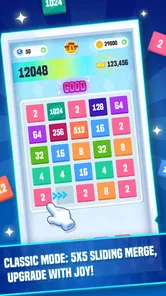
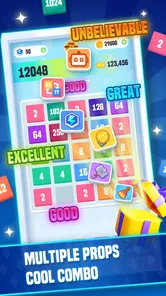
Let’s dive into what makes the 2048 Fun Collection such a hit. First off, the game is all about swiping numbers on a grid to merge them into larger numbers, aiming to reach that magical 2048 tile. Sounds simple, right? However, the Fun Collection spices things up with multiple variations of this concept. You’ll find yourself not just sticking to the classic 4x4 grid but exploring different themes and grid sizes that keep your mind sharp and your fingers busy.
Features Galore
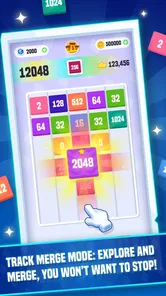
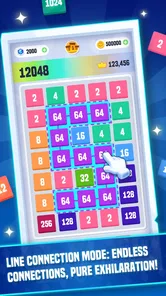
One of the standout features of this app is its variety. The Fun Collection includes different modes like the Fibonacci sequence, where you merge numbers to create a sequence, and the Reverse mode, which is a real brain teaser. Each mode adds a new layer of complexity and fun. Plus, the game’s design is sleek and user-friendly, making it easy to navigate between different game modes and settings.
On a small phone screen, the useful habit is to pause for a moment before swiping rather than moving rapidly by reflex. In a crowded board, one hurried move can take away room you need for later merges; playing deliberately makes the puzzle feel more strategic and reduces avoidable mistakes. I also find it sensible to treat a new mode as its own learning session instead of judging it by the score I get in the classic format. The trade-off is that variety can make it harder to settle into one personal routine, especially if what you want is a single, consistent challenge.
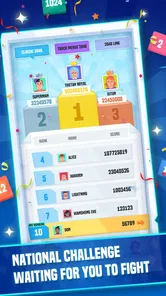
Another cool feature is the leaderboard. It’s always exciting to see how you stack up against players worldwide. Competing for the top spot can be quite addictive, trust me! And if you’re someone who loves to challenge friends, the app allows you to share your scores and invite others to beat your record.
More From Our News Desk

Weather by Xiaomi Review: Clear at a Glance, Less Clear Up Close

X Under Pressure: Can It Recover When Posting Goes Wrong?

Clash of Clans Is Won Between the Battles

Android Auto Makes the Case for Quieter Car Software

MobiOffice: Transforming Mobile Productivity with Seamless Integration

EA SPORTS FC™ Mobile Soccer: Redefining Mobile Sports Gaming
Speed, stability, and everyday play
For a swipe-and-merge puzzle, I would expect the basic interaction to feel immediate; it does not need elaborate action-game timing to be enjoyable. The more important performance question is whether a move registers cleanly when I am thinking several steps ahead. A brief pause between swipes is useful both for planning and for avoiding accidental inputs, so this is a game I would play at a measured pace rather than use to test a phone’s speed.
It suits small pockets of downtime particularly well: a short wait, a quiet commute, or a break between tasks. If a session is interrupted, number puzzles are naturally easy to put aside and return to, although I would avoid assuming that every unfinished board is preserved exactly as I left it. For dependable everyday use, I’d check that the game is still open before switching away during a run I care about. The collection’s appeal is mental rather than resource-heavy ambition; players who need demanding graphics, real-time competition, or a long-form progression system should look elsewhere.
Choosing it over other puzzle games
Compared with a basic 2048 clone, the draw here is the mix of rule variations alongside the familiar merging idea. That makes it a better fit for someone who enjoys revisiting the same kind of board with a changed objective. By contrast, a word puzzle may be a better choice if you want vocabulary practice, while a logic-grid game can offer more explicit deduction. This collection is most satisfying when you like spatial planning, quick decisions, and the gradual pressure of a board filling up.
It is also not the right pick if you dislike number-based play or want every mode explained through a guided tutorial before you begin. I’d recommend trying the classic approach first, then moving to Fibonacci or Reverse when you want to break the routine. That sequence gives you a familiar baseline and makes the differences between modes easier to appreciate, without turning a casual game into homework.
Making a session work for you
One useful way to keep the game relaxing is to decide what counts as a satisfying session before starting. I might aim to learn how a mode behaves, rather than treat every board as a challenge to beat a personal record. That change of goal matters because a run can end simply when the board has no useful space left; if every attempt has to produce a better score, a lightweight break can become oddly frustrating. The collection works best for me when I value the decisions along the way, not only the final tile.
For a realistic everyday example, imagine having a few minutes before an appointment. I’d open a familiar mode, make a handful of deliberate moves, and stop when I need to go in instead of trying to force a full run into the gap. If I have a longer, uninterrupted ride, I’d use that time to explore one of the less familiar rule sets and learn its merging rhythm. This is a small but practical distinction: the game can fit both situations, but the more experimental mode is easier to enjoy when I’m not watching the clock.
The same approach helps when sharing a phone or letting someone else try it. I’d explain the basic swipe-and-merge idea, then let the other person choose whether to start with the familiar puzzle or test a variation. That makes the game approachable without assuming that everyone wants a lesson or a competitive target. Its Everyone content rating also makes it a reasonable option to consider for a family device, though the best fit still depends on whether the player enjoys number puzzles.
What to expect from performance
This is a board puzzle, so its perceived speed is less about flashy animation and more about whether the controls feel predictable. My practical advice is to use one intentional swipe at a time, particularly when the board is crowded. That gives you a chance to see how the tiles settle and plan around the new arrangement. Rapid repeated swipes may feel faster, but they can turn a considered move into a guess and make it harder to tell which decision caused a poor position.
I would not choose it to judge how powerful a phone is. The visual and strategic demands of a number-merging game are modest compared with action games or graphically complex titles, but that does not guarantee identical responsiveness on every device. If input ever feels unreliable, slowing down and making a single swipe is a sensible first check; it also helps separate a rushed gesture from a genuine control issue. The game is most enjoyable when the pace is set by thought, not by tapping as quickly as possible.
For longer play, the main strain is likely to be attention rather than the kind of fast reactions demanded by an arcade game. A crowded board can take more concentration because each move affects where future merges remain possible. I’d take a brief pause when I start making reflexive moves, especially in Reverse or Fibonacci, where familiar habits may not apply. That is not a hidden performance trick; it is a way to keep the puzzle readable and reduce avoidable mistakes during a heavy-use session.
Interruptions and device fit
Because a puzzle can be paused mentally at almost any point, it suits short breaks better than games built around continuous rounds or timed action. Still, I would be cautious about switching apps in the middle of a board I care about. Mobile operating systems may close background apps when resources are needed, so I would return to the game before assuming an unfinished run is waiting exactly where I left it. If preserving a particular attempt matters, finishing or deliberately setting it aside is safer than relying on an untested recovery behavior.
The stated Android requirement is version 8.0 or later, which gives owners of many older Android devices a clear compatibility point to check before downloading. The game is free, so trying it is a low-commitment way to see whether the modes suit you. I would still think about screen comfort: number tiles and available space are central to the experience, so a very small display may make careful planning less comfortable, even if the game itself runs.
As for storage, battery use, and background behavior, I would avoid making assumptions from the puzzle format alone. A simple-looking game can still behave differently across devices and software versions. If you are trying to conserve battery on a long trip, closing games you are not using is sensible in general; if you have an older phone, checking that it meets the operating-system requirement is the concrete compatibility step that matters here. Neither point changes the core appeal, but both help set realistic expectations.
Who will enjoy the collection—and who may not
I’d recommend it to people who like spatial planning but do not want to commit to a lengthy campaign. It is particularly suitable for players who already understand the pleasure of making a small move now to preserve room for a better one later. The multiple rules offer a reason to come back when the classic pattern grows predictable, while the basic swipe-and-merge concept keeps the learning curve approachable.
On the other hand, I would skip it if your idea of a satisfying puzzle is a fixed sequence of clues with one carefully demonstrated solution. This is more about managing a changing board and adapting to the numbers that appear than following a narrative or a set of handcrafted stages. Players looking for a deep competitive ladder, persistent story progression, or substantial action should choose another genre. Even people who enjoy puzzles may prefer a word game when they want language practice, or a logic puzzle when they want explicit deduction rather than tile management.
One trade-off of a collection is that breadth does not necessarily mean every mode will suit every player equally. I’d give each variation a fair try, but I would not force myself to rotate through them just because they are available. If one mode clicks, sticking with it is perfectly reasonable; if none feels satisfying after a few attempts, a focused 2048 game may be a cleaner choice. The value is in having alternatives at hand, not in needing to use all of them.
Why You Should Give It a Try
So, why should you download the 2048 Fun Collection? Well, if you’re looking for a game that combines strategy, fun, and a bit of mathematics, this is it. It’s great for quick breaks or long commutes when you want to keep your brain active. Plus, the satisfaction of merging numbers into larger ones is oddly satisfying.
The app is free to download and doesn’t bombard you with ads, which is a huge plus in my book. You can enjoy the game at your own pace without being interrupted by constant advertisements. And did I mention that it’s available on both Android and iOS? Yep, you can enjoy it no matter what device you’re using.
It has a 4.2 average from 457 ratings, with 93 written reviews, and has passed 500K installs. That level of uptake suggests plenty of people have tried it, but I’d still judge it by whether its particular mix of number modes suits you. It is free and rated for Everyone, which makes it an easy option to consider for a shared-device puzzle break. The game was released on January 14, 2025, and version 1.2 is listed for devices running Android 8.0 or later.
Final Thoughts
In conclusion, the 2048 Fun Collection is a must-have for any puzzle lover. It’s engaging, challenging, and offers a refreshing take on the original 2048 game. Whether you’re a seasoned player or a newbie, there’s something here for everyone. So go ahead, give it a whirl, and let the number merging madness begin! You won’t regret it.
2048 Fun Collection Frequently Asked Questions
What kind of puzzle variety does 2048 Fun Collection offer?
The appeal of 2048 Fun Collection is that it offers multiple modes for puzzle play, rather than focusing on only one way to enjoy the 2048-style challenge. That makes it a casual option for players who like combining numbered tiles and want some variety between rounds. The core experience remains easy to understand, while planning each move gives the game its strategic edge.
What is 2048 Fun Collection and how do I play it?
2048 Fun Collection is a puzzle game that combines strategy and math. The objective is to slide numbered tiles on a grid to combine them and create a tile with the number 2048. The game is played on a 4x4 grid, and each move involves sliding the tiles up, down, left, or right. New tiles appear with each move, and the game ends when there are no more moves available. It's a simple yet addictive game that challenges your strategic thinking.
Is 2048 Fun Collection free to download and play?
Yes, 2048 Fun Collection is free to download and play. However, like many free games, it may include in-app purchases. These purchases can enhance your gaming experience by offering additional features, ad removal, or other bonuses. Ensure to check the in-app purchase options and prices if you plan to make any purchases within the game.
What are the system requirements for 2048 Fun Collection?
On Android, 2048 Fun Collection requires Android 8.0 or later. Check the app store on your device to confirm compatibility before downloading. The game is a casual puzzle experience, so its basic play style is easy to pick up, but meeting the operating system requirement is the key first step to installing it. For iOS users, check the listing on your device for compatibility.
Can I play 2048 Fun Collection offline?
Yes, you can play 2048 Fun Collection offline. The game does not require an internet connection to play, which makes it perfect for playing on the go or when you are in an area with limited connectivity. However, some features, such as certain in-game updates or multiplayer options, might require an internet connection.
Pros
- Engaging gameplay keeps users entertained.
- Variety of puzzles increases replayability.
- Simple controls enhance user experience.
- Minimalistic graphics reduce battery consumption.
- Offline play mode available for convenience.
Cons
- In-app ads can be intrusive at times.
- Lacks multiplayer or social features.
- Limited theme customization options.
- No tutorial for new players.
- Sound effects can be repetitive.