 About Pou
Pou’s Quiet Comeback Shows the Pull of Small Daily Routines
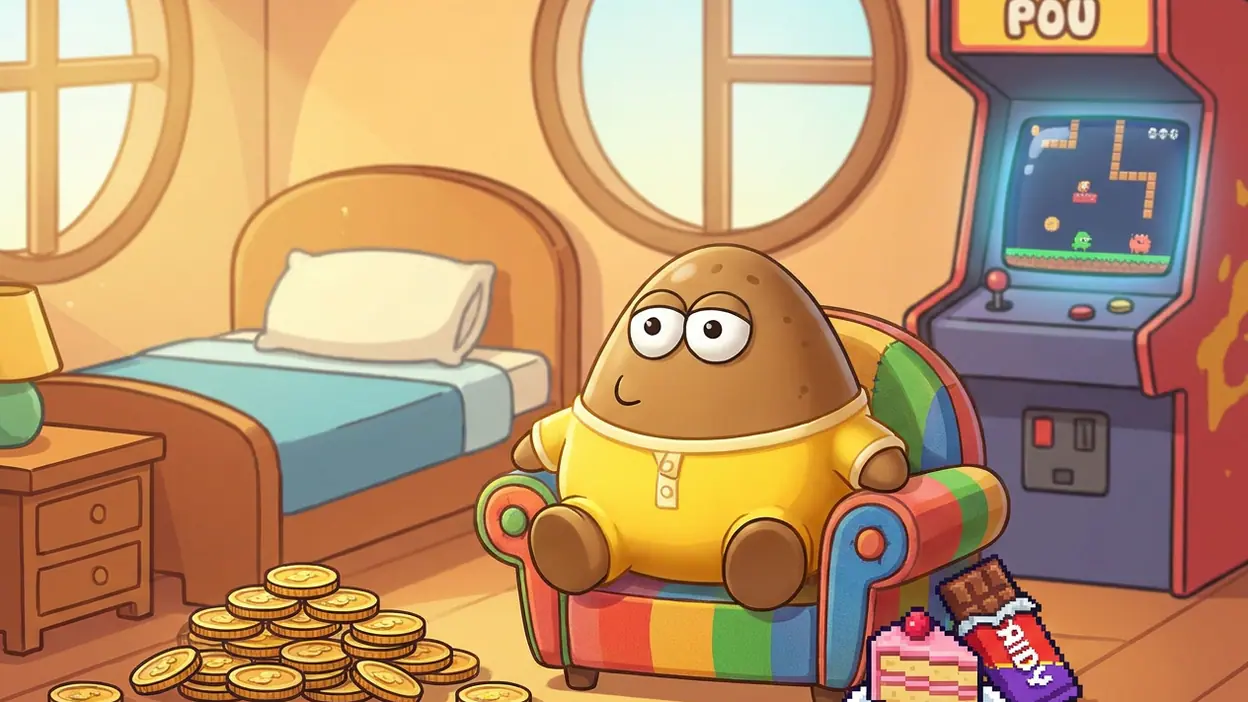
A brown, potato-shaped alien asking for a bath is an unlikely candidate for a new wave of attention. Yet Pou keeps turning up in conversations about comfort games, childhood favorites, and the small mobile distractions people reopen between everything else. Its momentum is not powered by a dramatic update or a competitive scene. The appeal is simpler: Pou makes checking in feel like a tiny, manageable relationship, and that modest promise has proved remarkably easy to pass along.
That distinction matters. Plenty of casual games can seize a few minutes; fewer make those minutes feel like part of an ongoing routine. Pou does not need to beat Candy Crush Saga at delivering a burst of color or outperform My Talking Tom 2 at theatrical pet antics. It has its own softer rhythm: feed the creature, clean up after it, play a quick game, earn coins, and make the little room feel more like yours. The current interest is less a conventional blockbuster revival than a reminder that a familiar digital pet can still feel personal.
Why the small routine is traveling again
There is no single reason for renewed attention, and it would be a mistake to treat every social post or nostalgic mention as proof of a sudden mass migration. The more persuasive explanation is that Pou fits several moods at once. It is recognizable to people who played it years ago, easy to explain to someone new, and visually odd enough to be memorable in a crowded feed. A round, expressive creature needs no long tutorial to communicate the premise.
That immediate readability helps social spread. A clip of a neglected Pou, a freshly changed outfit, or a chaotic mini-game carries its own context. People can react without knowing the game’s history, while former players get a quick route back to a remembered routine. The result is a useful kind of cultural shorthand: Pou can mean childhood, low-stakes caretaking, or simply a funny little alien, depending on who is looking.


There is also a contrast with the pressure built into many mobile hits. Candy Crush Saga continually frames progress around clearing a board, while pet games such as My Talking Tom often lean into performance and character antics. Pou’s daily needs create a softer invitation. The game asks for attention, but usually in small doses, and it does not require a player to master a sprawling system before anything feels rewarding.
What players respond to
The central pleasure is the creature itself. Pou’s plain shape gives its changes a surprising amount of personality: a different outfit, a cleaner face, or a more cheerful expression can make it feel newly yours. It is not a richly written character, and the game does not pretend otherwise. Instead, it leaves room for the player to supply the attachment. That blankness is part of the design, not a missing feature.
Care tasks make that attachment physical. Food disappears, dirt accumulates, and energy needs attention. These are simple signals, but they turn a static mascot into something that seems to have a day. The routine can be satisfying precisely because it is legible. You can see what needs doing, do it, and leave with a sense of completion rather than a list of unfinished challenges.
Latest News


Customization deepens the feeling without changing the game’s basic scale. Clothes, colors, and room details give players low-cost ways to make their version distinct. It is a gentle form of ownership: not a vast creative toolkit, but enough choice to make a return visit feel connected to a personal space. The mini-games then break up the caretaking with quick bursts of action, supplying coins that feed back into more decorating and dressing up.
That loop has a pleasing, almost household rhythm. Check the pet, handle the obvious needs, play something brief, spend the reward, and move on. It does not demand a long session or a fixed plan. For players who want a companion game rather than a ladder to climb, that restraint is a real advantage.
The retention hook and its limits
At the heart of Pou is a low-friction return loop. The pet’s needs create a reason to open the game again; the mini-games offer a quick diversion; coins make that diversion feel useful. The pieces reinforce one another without requiring a complicated strategy. Even a short visit can produce a visible result, which is valuable on a phone where attention is often divided.
But routine is not the same as depth. Once players have learned the care cycle and found their favorite mini-games, the basic structure can become predictable. The game’s durability depends on whether players enjoy maintaining a small digital presence, not on a steady stream of fresh systems or an increasingly intricate campaign. If the pet stops feeling endearing, the chores can look like chores very quickly.
That is where comparisons with My Talking Tom and My Talking Angela are useful. Those games foreground character performance and a more overt sense of personality. Pou is less of a stage show. It is closer to a pocket-sized pet diary, with much of its charm coming from repetition and customization rather than elaborate reactions. Players who want constant novelty may find the other style more immediately entertaining; players who like a calm routine may prefer Pou’s lighter touch.
How shareable is the play?
Pou is easy to show, though not especially easy to watch for long stretches. Its best social moments are compact: a visual makeover, an absurdly timed mini-game, a neglected pet brought back into order, or a comparison between how different people have dressed theirs. These are naturally suited to short clips and screenshots because the joke or transformation lands quickly.
It is not built around spectacle, competition, or a deep skill ceiling, so it has less of the sustained drama that can make a game a streaming fixture. A viewer may enjoy a quick visit, but the ordinary care loop does not generate much tension. The game spreads more effectively as a shared object of recognition than as an ongoing performance. People post it because they remember it, because it looks distinctive, or because their own Pou has become a small personal oddity.
That social shape may be more durable than a brief viral burst. A trend built only on a surprising clip burns through its novelty. A familiar game that invites people to compare habits, outfits, and memories can return whenever someone brings it up. The posts do not need to convert every viewer into a daily player to keep the game visible.
Where the chatter sits
The conversation around Pou tends to cluster around three things: nostalgia, caretaking, and personalization. Longtime players trade memories of keeping the creature alive on an old phone; newcomers encounter it as a simple pet game with an oddly distinctive look; and casual fans focus on outfits, rooms, or funny moments. Those strands reinforce one another, but they are not identical. Nostalgia can spark a download, while routine determines whether someone keeps the game installed.
This is also why its attention can look larger than its active-play intensity. A familiar name can travel through social feeds and group chats even when most people only revisit briefly. That does not make the interest false; it means the game’s cultural reach should not be confused with a universal appetite for long sessions. Pou is particularly good at being remembered and reopened, which is a different achievement from dominating someone’s screen time.
Its low barrier helps newcomers join the conversation without needing a guide. The first few actions explain the whole premise, and a player can find a satisfying task almost immediately. Yet anyone expecting the latest wave of attention to reveal a hidden competitive mode or a sprawling adventure should adjust expectations. The appeal is right on the surface.
What a new player should expect
Expect a friendly, self-contained pet routine, not a plot-heavy game. You will tend to care for Pou, try short mini-games, collect rewards, and use them to personalize the creature and its surroundings. The pleasure comes from small acts repeated over time, not from a grand reveal. A first session is easy to understand; the longer question is whether the rituals become comforting or repetitive for you.
Players who enjoy gentle check-ins may find the pacing refreshing. There is little need to optimize every choice, and the game’s simple visual language makes it approachable even if you have not played in years. Those looking for a demanding puzzle challenge, competitive rankings, or a constant stream of new content may find the core loop too slight. Pou is at its best when treated as a pocket companion, not as a game that must justify hours of uninterrupted play.
Its mini-games are important because they prevent care from becoming the only activity, but they do not transform the experience into a collection of deep arcade systems. Think of them as palate cleansers and coin earners. The main attraction remains the relationship between visits: noticing what needs attention, doing something small about it, and seeing your version of Pou look a little more complete.
Does the trend have staying power?
The strongest case for durability is that Pou’s appeal does not depend on a single joke. Its familiar silhouette, easy routine, and customization give it several ways to remain relevant. Someone can return for nostalgia, another person can adopt it as a low-pressure pet game, and a third can enjoy the social fun of showing off a strange outfit. That flexibility gives the game more staying power than a novelty whose entire appeal is one viral moment.
Still, cultural attention and long-term retention are different tests. Nostalgia can bring back lapsed players, but it cannot guarantee that the daily loop will stay compelling. If a new player finds the care tasks repetitive or the mini-games thin, affection may fade after the first burst of curiosity. Pou’s retention is strongest among people who like small rituals and weakest among those who need regular mechanical surprises.
Several things could cool the trend. Social feeds move quickly, and a wave of throwback posts can vanish as soon as another familiar game claims the same space. Repetition may also expose the limits of the content for players who want deeper progression. And if a player treats every need as an obligation rather than a cue for a quick visit, the pet can become another notification-shaped responsibility. The game works best when its routine stays optional in spirit, even if it encourages regular returns.
The editorial take
Pou is not suddenly everywhere because it has reinvented mobile games. It is circulating because its small promise still makes sense: a funny little creature, a few simple needs, quick diversions, and enough customization to make the connection feel personal. The game’s social momentum comes from recognition and shareable moments; its retention comes from routine. Those forces can support one another, but neither turns the experience into something it is not.
My verdict is that Pou’s current heat has genuine staying power as a recurring comfort game, though not necessarily as a dominant daily habit for everyone who tries it. Its best quality is the modesty of its loop: it asks for a little attention and gives back a visible, personal change. Its weakness is the same modesty, which can leave the experience feeling thin once the ritual loses its charm. If you want a relaxed digital pet with a clear personality and no demand for marathon sessions, the buzz is worth following. If you need constant novelty, this is more likely to be a fond visit than a permanent fixture.