Run Challenge3D:Parkour Game
- 16.00
- 4.4
- Installs
- 1.00M
- Price
- Free
Screenshots
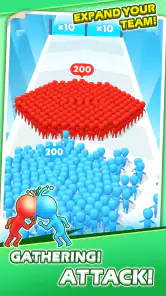
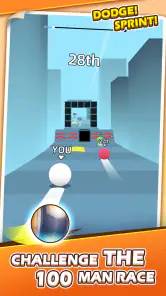
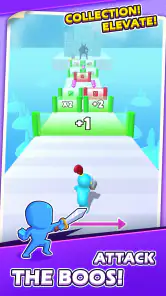
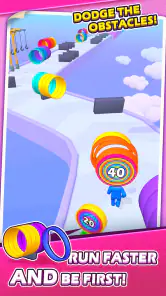
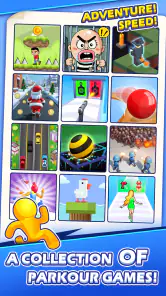
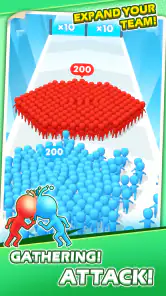
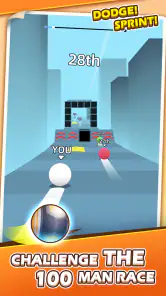
Analysis by Reviewed
Run Challenge3D: Parkour Game is a casual runner built around quick movement, obstacles, and the pressure of getting through each challenge. I’d consider it when I want an active game that is easy to pick up, rather than a long story or a complex simulation. Its pitch is survival through a run, so the appeal is less about relaxing scenery and more about staying alert as the course pushes back.
Starting free, with purchases to consider
The game is free to download, with in-app purchases listed at $1.99 per item. That gives me a clear starting point: you can try it without paying upfront, while optional spending is part of the package. I would treat any purchase as something to consider only after I know I enjoy the core loop; the listed price alone doesn’t tell me what an item contains or whether it changes play.
Happy Go Game is the developer, and the game is rated Everyone. It has a 4.4 average from around 4,700 ratings and has passed a million installs. Those figures suggest plenty of people have tried it, but they don’t settle the question that matters more to me: whether its moment-to-moment challenge feels fair on my own device and at my own pace.
How the runs feel over time
Run Challenge3D is on version 1.0.17 and supports Android 7.0 and up. It was released on February 20, 2025, so it is a relatively recent casual game. I’d expect the experience to be easiest to judge in short sessions: a few runs are enough to tell whether the movement and obstacle timing suit you, without committing to a lengthy campaign.
Pressure, practice, and progress
The useful way to approach a run is to read the course before reacting. When an obstacle appears, rushing every input can make a challenge feel harsher than it is; I’d focus on spotting the next decision early and treating a failed attempt as information about timing. That small habit is especially helpful during a spare moment, such as waiting for a ride, when I want a compact test of attention rather than a game that needs a long setup.
For a more reliable first impression, I’d play with enough attention to notice what each obstacle asks of me rather than tapping hurriedly while doing something else. A short attempt can be useful, but the game’s reaction-based pressure is not ideal when I need to keep looking away from the screen. If I’m in a queue and can focus for a minute, it may suit the gap; if I’m walking, crossing a street, or responsible for something that needs my attention, I’d leave it for later.
One practical way to keep retries useful is to change just one thing after a mistake: react earlier, wait a fraction longer, or pay closer attention to the next obstacle. That gives me a clearer sense of whether I misread the course or simply rushed the input. Repeating a run without reflecting can turn a quick challenge into frustration, while a small adjustment makes practice feel purposeful.
More From Our News Desk

Clash of Clans Is Won Between the Battles

Android Auto Makes the Case for Quieter Car Software

MobiOffice: Transforming Mobile Productivity with Seamless Integration

EA SPORTS FC™ Mobile Soccer: Redefining Mobile Sports Gaming

How Microsoft OneDrive Became a Mobile Productivity Giant

How Google Translate Breaks Language Barriers Effortlessly
Compared with a standard endless runner, a challenge-focused parkour game asks me to care more about the obstacle sequence in front of me than simply keeping a run alive for as long as possible. Compared with a dedicated parkour or platform game, it is better suited to brief attempts than to players looking for deep movement mastery. If I want a calm game to play while distracted, or a precise platformer with extensive control depth, I’d choose something else.
That difference also helps set expectations about progress. I would approach it as a sequence of focused attempts, not as a substitute for a sprawling casual game with a large collection of systems to manage. If I have ten minutes and want a clear test of attention, the compact challenge can be a plus. If I want a game that rewards wandering around, building a collection, or settling into a story, another kind of casual title is a better match.
Fairness and spending
I can confirm the free entry point and the per-item purchase price, but not what each item does. That distinction matters: I wouldn’t assume purchases are cosmetic, necessary, or a shortcut, and I wouldn’t spend to solve a difficulty spike before I understood the offer. For a fair test, I’d first play without buying anything and see whether progress feels satisfying on its own.
The same restraint applies to competition. Leaderboards are mentioned as part of the game’s replay appeal, but I wouldn’t use a ranking alone as proof that every player has identical conditions. If competing is the main reason you’re interested, check how the game presents scores in your own play and decide whether that feels motivating rather than stressful.
When a purchase appears, I’d pause long enough to read the in-game explanation and consider whether the item solves a problem I actually have. A listed price tells me the cost per item, not its value, effect, or role in progression. That makes a no-spend trial the sensible default for anyone unsure: it keeps the decision tied to how much fun the runs provide, rather than to impatience after a difficult attempt.
For players who care about competition, I’d separate personal improvement from leaderboard position. A ranking can be an appealing reason to replay, but it is only useful if I enjoy the challenge regardless of where I appear. If comparing scores makes a brief game feel like an obligation, I’d ignore the competitive angle and treat each run as a small personal test instead.
Who will enjoy it—and who may not
This is a sensible fit for someone who likes quick obstacle courses, wants a free game to sample, and enjoys repeating a section to improve a run. It is less convincing for a player who dislikes retrying, wants a detailed account of purchase effects before deciding, or prefers a slower experience with fewer demands on attention. The Everyone rating makes its intended audience broad, but it does not mean the fast reactions will suit every player.
A realistic everyday use is a short break between tasks: I can try a run, decide whether I want another, and put the phone away without needing to remember a complex plot. The trade-off is that the same quick pace can be a poor fit if I’m already tired or distracted. I’d save it for a moment when I can focus, rather than treating it as background entertainment.
It is also a better choice for someone who enjoys learning through repetition than for someone who expects every attempt to feel different. If I like noticing a mistake and trying a more deliberate response, that loop has a clear purpose. If repeating a challenge feels like being stuck rather than improving, I would not force myself to keep going simply because a level is unfinished.
A practical first session is to try a few challenges when you have a short break, then stop before frustration turns practice into a chore. Notice whether you can learn from a mistake and adjust your timing; that tells you more about the game’s fit than pushing through a long session. If it clicks, the compact format is a useful way to fill small gaps in the day.
What I would check before settling in
Two reasonable questions are whether you need to pay to keep progressing and whether the game works well for your preferred style of play. The purchase information confirms optional in-app items are offered, but it doesn’t establish their effects or whether they are needed for progress, so I’d make that judgment from the actual choices shown in the game. Likewise, the Android minimum is clear, but performance and controls can feel different across devices; a brief trial is the practical way to see whether the movement responds well for you.
Another useful check is whether the controls feel comfortable in your hands during repeated attempts. A movement game depends on timely input, so what feels manageable for one player may feel awkward for another. I’d test it in a quiet moment and avoid drawing a conclusion from a single stumble; if the response still feels uncomfortable after a few focused tries, that is a practical reason to move on.
If you are choosing between this and another casual runner, decide what you want from a session: a quick reaction challenge, or a longer game built around collection, exploration, or a story. Run Challenge3D appears most appealing when the first option is the point. I would skip it if I needed detailed assurances about competitive balance or purchase value before installing, because the available purchase facts do not answer those questions.
Movement and the learning curve
What makes Run Challenge3D stand out from other mobile parkour games is its intuitive controls and fluid gameplay. Swiping left and right to dodge obstacles, and tapping to jump or slide under barriers, felt smooth and responsive. The game’s physics engine ensures that each movement is realistic, adding to the overall thrill.
The variety of levels kept the game engaging. Some levels required precise timing, while others tested my strategic thinking. The more I played, the more I appreciated the level design and how each stage introduced new elements to keep things interesting.
For me, the useful test is not whether I can clear everything immediately, but whether the obstacles teach me something I can apply on the next attempt. When I can connect a failed move to a timing choice, retrying feels like practice rather than a coin toss. If I cannot tell what went wrong, the same repeat-heavy format may feel less rewarding, so I’d judge the game by that learning loop rather than by how quickly I make progress.
Visuals and soundtrack
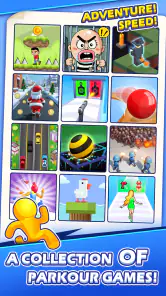
The graphics in Run Challenge 3D are nothing short of stunning. The vibrant colors and detailed environments create an immersive experience that pulls you right into the action. Each level has a distinct theme, ranging from urban landscapes to futuristic settings, which kept the visual experience fresh and exciting.
Accompanying the visuals is a high-energy soundtrack that perfectly matches the fast-paced nature of the game. The sound effects add an extra layer of excitement, making each jump and slide feel impactful. I found myself getting lost in the rhythm of the game, which is a testament to its excellent audio design.
That energetic presentation is part of the appeal, though it may not be what I want in every setting. I would choose a quiet place to play if I need to hear the game clearly, or lower the volume when a busy environment makes sound distracting. The visual activity also means I would not treat it as a game to glance at while multitasking; its strongest moments depend on giving the course my attention.
Replay value
One of the aspects I loved most about this game is its high replay value. With numerous levels to conquer and a variety of challenges to overcome, there’s always something new to achieve. Additionally, the game includes leaderboards, encouraging competitive play as you strive to beat your friends' scores. I found myself repeatedly coming back to improve my times and climb the ranks.
That replay pull will vary by player. Someone who enjoys shaving mistakes out of a run may find a reason to return, while someone who wants constant novelty may tire of repeating challenges. I’d use the leaderboard as an optional nudge, not as the only measure of whether a session went well: a cleaner run or a better grasp of a tricky section can be satisfying even without focusing on rank.
My trust verdict
Run Challenge3D: Parkour Game works best for me as a free-to-try, short-session reaction game, with a clear caveat: I would decide about spending and competition only after seeing how they feel in actual play. Its appeal rests on quick runs, obstacle reading, and the urge to try again; it is not the right pick if I need a slow pace, a long-form adventure, or detailed certainty about purchase effects before installing.
In conclusion, Run Challenge 3D: Parkour Game is a thrilling and addictive mobile game that delivers on all fronts. With its engaging gameplay, stunning visuals, and immersive soundtrack, it’s a must-play for any mobile gaming enthusiast. If you’re looking for a game that will test your skills and keep you entertained for hours, look no further. Download it now and start your parkour adventure!
Run Challenge3D:Parkour Game Frequently Asked Questions
Is Run Challenge3D: Parkour Game suitable for casual players, or does it demand precise timing?
It is a casual game built around running and parkour-style challenges, so it can appeal to players looking for an accessible pick-up-and-play experience. Its obstacle-course concept also puts timing and agility at the center of play, making careful movement part of the challenge. The game’s short description calls it a battle for survival, which hints at a more demanding edge to its runs.
What is Run Challenge 3D: Parkour Game about?
Run Challenge 3D: Parkour Game is an exhilarating mobile game that combines parkour-style running with challenging obstacle courses. Players navigate through a variety of environments, overcoming hurdles, jumping across platforms, and performing acrobatic moves to reach the finish line. The game is designed to test agility, timing, and precision, offering endless fun and excitement for parkour enthusiasts.
Is Run Challenge 3D: Parkour Game free to play?
Yes, Run Challenge 3D: Parkour Game is free to download and play. However, like many free mobile games, it may offer in-app purchases. These purchases can enhance your gaming experience by providing additional lives, unlocking new levels, or accessing special features. Players can enjoy the game without spending money, but optional purchases are available for those who want more from the game.
What are the device requirements for Run Challenge 3D: Parkour Game?
Run Challenge 3D: Parkour Game is compatible with most modern Android and iOS devices. To ensure smooth gameplay, it's recommended to have a device running on Android version 5.0 or later, or iOS 10.0 or later. Adequate storage space is also necessary, as the game requires space for installation and data. Double-check your device specifications to ensure compatibility.
Does Run Challenge 3D: Parkour Game require an internet connection?
Run Challenge 3D: Parkour Game can be played both online and offline. While an internet connection is not required to enjoy the basic gameplay, certain features like leaderboards, in-app purchases, and updates may need connectivity. Playing offline allows you to enjoy the game without interruptions, but connecting online can enhance your experience with additional features.
Pros
- Engaging parkour gameplay keeps you entertained.
- Intuitive controls make it easy to play.
- Various levels offer diverse challenges.
- Vibrant graphics enhance the gaming experience.
- Multiplayer mode adds competitive fun.
Cons
- Frequent ads can be disruptive.
- In-app purchases can get expensive.
- Requires internet for multiplayer mode.
- Occasional lags affect gameplay.
- Limited customization options for characters.
- Category
- Casual
- Version
- 1.0.17