Idle Trillionaire: Money Game
- 14.00
- 4.5
- Installs
- 1.00K
- Price
- $3.99

Screenshots




Analysis by Reviewed
I approached Idle Trillionaire: Money Game as a quick check-in game: something to open for a few minutes, make a decision, then leave to run in the background. That rhythm is the main appeal of this casual money-building game. It is less about mastering complicated controls and more about deciding what to do with growing earnings. If you enjoy watching progress accumulate between short visits, its central idea is easy to understand and satisfying in the right mood.
Why idle income changes the rhythm
The game’s defining capability is that businesses can keep earning while you are away. In practice, that shifts the focus from constant tapping to periodic choices: return, look at the money available, and decide whether to reinvest it or build out another part of your operation. I find that works well when I want a small sense of progress without committing to a long session.
That convenience has a trade-off. An idle game can feel quiet when you want direct action, and passive earnings alone do not make every check-in exciting. I would treat the growing total as a gentle progress loop, not expect it to replace a fast-paced game or a detailed business simulator. Its appeal depends on enjoying the anticipation between visits.
A practical way to fit it into the day
For example, I could open it during a short break, spend a moment reviewing what has accumulated, choose an upgrade, and close it before returning to work. Later, I can check whether that choice has helped the business grow. This makes the game easy to fit around errands or a commute, while still giving each visit a simple purpose.
A useful habit is to make one deliberate decision per visit instead of treating every screen as a reason to keep playing. Reinvesting can make progress feel active, while spreading money across businesses may suit someone who likes seeing a broader operation develop. The important point is to choose based on what feels rewarding to you; the game’s basic loop is about growing wealth, not teaching real-world investing.
Where it sits among casual games
Compared with casual games built around quick reflexes or short puzzles, this one asks for patience and occasional planning rather than constant attention. Compared with a more involved tycoon or management game, its idle-income premise is easier to dip into, but it may not satisfy players who want detailed control over every business decision. I’d pick it for low-pressure progression, not for a demanding strategy challenge.
The premise also gives the game a specific sense of humor: becoming extraordinarily rich is the goal, and the scale is intentionally far removed from everyday finances. That makes it best approached as playful number growth. If you are looking for practical budgeting advice, a realistic economic model, or an action-heavy game, I would choose something else.
More From Our News Desk

Weather by Xiaomi Review: Clear at a Glance, Less Clear Up Close

X Under Pressure: Can It Recover When Posting Goes Wrong?

Clash of Clans Is Won Between the Battles

Android Auto Makes the Case for Quieter Car Software

MobiOffice: Transforming Mobile Productivity with Seamless Integration

EA SPORTS FC™ Mobile Soccer: Redefining Mobile Sports Gaming
Starting from Scratch
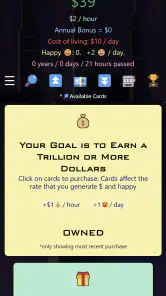
When you first dive into Idle Trillionaire: Money Game, you're essentially a nobody with zero bucks to your name. But don't worry, because the whole point of the game is to become ridiculously wealthy! You start small, investing in basic businesses like lemonade stands and as you progress, you move on to bigger ventures. It's all about that thrill of seeing your money grow exponentially.
Gameplay and Features
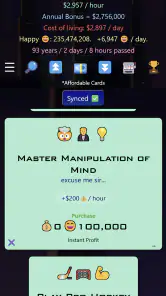
One of the things I love about this game is its simplicity. The interface is super user-friendly and intuitive, which means I didn’t have to scratch my head trying to figure out where everything is. Plus, the graphics are pretty neat too—not overly complicated but just enough to keep you engaged.
The game operates on the principle of idle income, which means you earn money even when you're not actively playing. I found this feature pretty awesome because, let's face it, who doesn't want to make money while you sleep? You can reinvest your earnings to upgrade your businesses or diversify your investments. There's a real sense of satisfaction in watching your empire grow from a few bucks to trillions.
Challenges and Strategy
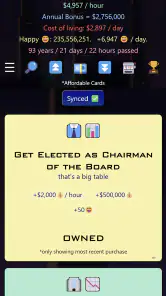
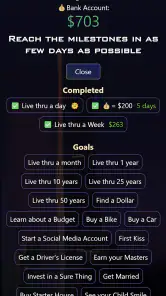
As you grow richer, the game throws more challenges your way. You have to make strategic decisions about where to invest and which upgrades to prioritize. There's also this cool feature where you can participate in global competitions to see how you stack up against other players. It's intense, but it definitely adds an exciting layer of competitiveness.
Another aspect I found intriguing is the option to hire managers. These managers automate the processes of your businesses, ensuring you don’t have to micromanage everything. It’s a clever way to keep the game going even when you're busy with real-life stuff.
Making progress without turning it into a chore
For a short session, I would first look at what has accumulated, then choose a single priority: improve an existing business, broaden the operation, or use a manager to reduce the need for repeated attention. This order makes the visit feel purposeful without requiring me to inspect every choice. If I have only a minute, I can make one clear decision and leave; if I have longer, I can compare priorities before spending.
There is also a useful distinction between a check-in that feels rewarding and one that becomes routine. When I return simply to collect a larger total, the loop can lose its spark. The more satisfying visits are the ones where I have a reason to make a choice—such as directing new earnings toward a business I have been neglecting or automating something I do not want to keep managing manually. That keeps the idle feature from being just a number on a screen.
Because progress continues between visits, I would not treat the game like a task that needs constant monitoring. A practical approach is to play when convenient rather than setting a schedule around it. That is especially helpful for anyone who already has several mobile games competing for attention: this one can occupy the low-effort slot, while games that demand active input get the longer sessions.
How to judge its fit
The choice of priorities matters most when I want the game to stay a pleasant break rather than another task list. I would decide in advance whether a session is about advancing one business or spreading investment around, then stop once I have made that choice. That small boundary helps keep an incremental game from turning a spare moment into a long, repetitive session.
It is also worth being clear about what kind of competition feels fun. The global contests described in the game add a comparison with other players, but they may not be the reason to play if you prefer a completely solitary, unhurried experience. I would focus on personal progress first and treat competition as an extra, not as a measure of whether a session went well.
Managers are most useful if the appeal of the game is its background rhythm rather than frequent hands-on upkeep. I would think of hiring them as a way to simplify the routine, not as a guarantee that every later decision disappears. If you enjoy personally tending each part of a business, automation may reduce the involvement you like; if you want to check in briefly and get on with your day, it is a more natural fit.
A realistic day with the game
Imagine opening it while waiting for a coffee or during a quiet moment between errands. I would check the earnings, choose one upgrade or manager-related step, and put the phone away. Later, perhaps at home, I could see whether the business has moved forward and decide whether to keep investing in that direction or spread my attention elsewhere. The point is not to squeeze a perfect strategy out of every visit; it is to make small decisions that feel satisfying at the pace the game supports.
This routine also helps answer a practical question: does an idle game need to be open to remain worthwhile? Its core appeal is that businesses earn while you are away, so I can treat it as a game to revisit rather than one that needs continuous screen time. That will suit people who like checking progress in spare moments. Anyone who wants every minute of play to involve active choices, however, may find the quiet intervals less engaging.
What to expect before installing
The game is developed by theSlantedRoom, and its casual structure is a good fit for players who like background progress, simple investment choices, and a clear wealth-building target. Its average rating is 4.5 from 26 ratings, with 14 written reviews, and it has passed 1K+ installs. Those figures suggest a modest audience rather than a huge community, so I would not choose it mainly to find a massive player scene.
It costs $3.99, carries a Mature 17+ age rating, and was released on October 4, 2023. The current version is 3.04, and it requires Android 5.1 or later. That makes the purchase decision straightforward: this is a paid casual game, so I would first ask whether its slow, idle progression is exactly what I want. Players who prefer free-to-start experiments or immediate, hands-on action may be happier with another option.
The age rating is worth considering before handing the game to a younger player, even though the money-building premise may sound broadly accessible at first glance. I would also approach the purchase as a choice about the style of play, not just the theme: paying makes sense when low-pressure, ongoing progress is something you already enjoy. If you normally abandon idle games once the first novelty fades, a free alternative is a safer way to test whether that loop suits you.
Who gets the most from this kind of progression
I would recommend it most readily to someone who enjoys seeing a small operation grow, likes making occasional upgrade decisions, and does not mind waiting between moments of activity. It can also work for a player who wants a compact mobile diversion alongside a busy day, because a session can have a simple beginning and end. The managers and background earnings support that lighter pattern better than a game built around continuous attention.
On the other hand, I would skip it if I wanted a deep business simulation with detailed control, a fast stream of challenges, or a game whose fun depends on skillful moment-to-moment play. The competition may appeal to players who enjoy comparing progress, but someone who dislikes leaderboards or social comparison can simply focus on personal growth. For a more involved management experience, a tycoon game with hands-on systems is likely a better match; for quick stimulation, a puzzle or action game will deliver more immediate feedback.
Final Thoughts
Overall, Idle Trillionaire: Money Game is a fantastic app for anyone who enjoys strategy and simulation games. It's easy to pick up, yet challenging enough to keep you coming back for more. Whether you're a casual gamer or someone who loves diving deep into economic strategies, this game has something for everyone.
If you're looking for a game that combines fun with a bit of financial savvy, I’d definitely recommend giving this one a go. After all, who wouldn't want to become a trillionaire, even if it's just in the virtual world?
Idle Trillionaire: Money Game Frequently Asked Questions
What does the Mature 17+ rating mean for Idle Trillionaire: Money Game?
Idle Trillionaire: Money Game is rated Mature 17+, so it may not be suitable for younger players. Anyone considering a download should check that rating against their own age and household preferences. The game’s central theme is building wealth, and its store summary sums up the premise with the line, “Greed is a virtue in Idle Trillionaire. Success is defined by your net worth.”
Does Idle Trillionaire: Money Game cost money to download?
The game costs $3.99, so it is a paid download rather than a free-to-start title. It is also listed as offering in-app purchases, which are described as optional in the published gameplay information. Consider both the upfront cost and the possibility of optional purchases when deciding whether it suits your budget.
What kind of game is Idle Trillionaire: Money Game, and who is it for?
Idle Trillionaire: Money Game is a casual game from theSlantedRoom. Its focus on growing wealth through idle-style play may appeal to people who enjoy incremental progress and a business or money-making theme. It has an average rating of 4.5 from 26 ratings, though individual preferences will vary, so those figures are best treated as a general snapshot rather than a guarantee that every player will enjoy it.
What is Idle Trillionaire: Money Game about?
Idle Trillionaire: Money Game is an engaging simulation game where players aim to amass wealth and become trillionaires. The game involves investing in various businesses, managing resources, and making strategic financial decisions to grow your empire. It's designed to be played in short bursts, making it perfect for casual gamers who enjoy incremental progress.
How does the game progression work in Idle Trillionaire?
In Idle Trillionaire, progression is achieved by investing in different types of businesses and upgrading them to increase profits. As you earn more money, you unlock new opportunities and challenges that keep the gameplay fresh and exciting. The game also includes idle mechanics, allowing players to continue earning money even when they are not actively playing.
Pros
- Engaging idle gameplay mechanics.
- Attractive graphics and animations.
- Frequent updates with new content.
- Strategic management elements.
- Offline earnings capability.
Cons
- In-app purchases can be expensive.
- Advertisements can be intrusive.
- May require constant internet.
- Progression can feel slow.
- Limited customization options.
- Category
- Casual
- Version
- 3.04