Hole Eater 3D: Relaxing Puzzle
- 286.00
- 4.6
- Installs
- 100.00K
- Price
- Free

Screenshots

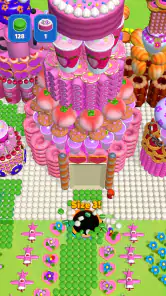
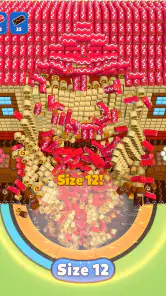
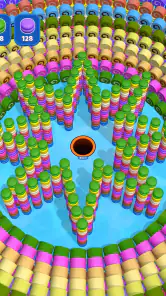
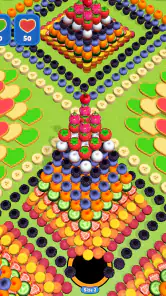
Analysis by Reviewed
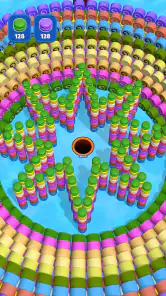
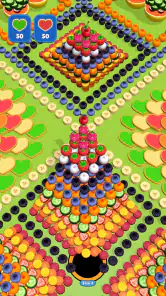
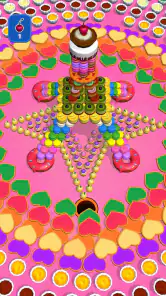
I spent time with Hole Eater 3D: Relaxing Puzzle as a light, casual game built around one immediately understandable idea: guide a black hole through a scene and swallow objects to grow. That premise makes the game easy to pick up, especially when I only have a few spare minutes and do not want a complicated ruleset. It is the kind of experience that explains itself through play rather than through a long tutorial.
The game comes from Zenergy Game and is free to download, with optional in-app purchases listed from $0.99 to $99.99 per item. That range is worth noticing before installing, not because it proves the game is unfair, but because it tells me to treat spending as an optional part of the experience rather than an invisible detail. It is rated for Everyone, runs on Android 6.0 and later, and the current version is 3.5.1.
My overall impression is positive but specific: this is best approached as a short-session arcade puzzle, not as a deep strategy game or a serious competitive challenge. The swallowing mechanic has a pleasant rhythm, and the three-dimensional presentation gives ordinary object collection a satisfying sense of movement. At the same time, players who need transparent progression, demanding long-term goals, or clearly explained competitive systems may want to look elsewhere.
How the black-hole puzzle loop feels in everyday play
The strongest part of the design is its low barrier to entry. A black hole that consumes objects is a visual idea most people understand instantly, so I did not need to memorize complicated controls or study a dense interface before getting started. That matters for a casual title: the first few moments should feel inviting, and this one has a clear visual purpose from the beginning.
The basic loop also has a natural sense of escalation. Small objects are easy to collect, while larger targets become more appealing as the hole grows. Even without turning the game into a complex simulation, that change gives each short attempt a simple question to answer: should I clear what is nearby now, or move toward a more valuable target and build momentum?
I found that the most enjoyable sessions were the ones where I treated the level like a small route-planning exercise. Instead of moving randomly, I looked for clusters of objects and tried to sweep through them in an order that kept the hole active. This is one of the less obvious strengths of the concept. The game may look like simple collecting, but the satisfying moments come from choosing a path that reduces wasted movement.
That approach is particularly useful during an ordinary break. If I have a few minutes while waiting for an appointment or taking a pause between tasks, I can play without first reconstructing a complicated story or remembering a detailed build. The immediate objective is visible, and the tactile rhythm of moving, consuming, and growing makes the session easy to enter and leave.
However, the same simplicity can become a limitation. Players who want layered puzzles with several interacting rules may find the black-hole idea more entertaining than intellectually demanding. The appeal depends heavily on enjoying the movement and the visual payoff of swallowing objects. If that loop does not feel satisfying to you, there is not much complexity around it to compensate.
Small decisions matter more than fast movement
My practical tip is to resist the urge to chase the biggest visible object immediately. A short route through several smaller targets can create a cleaner progression than crossing the whole area for one tempting item. This is not a complicated trick, but it changes the feel of a run: you begin reading the space as a sequence rather than as a collection of isolated objects.
I also recommend using the edges of the play area deliberately. Sweeping along a boundary can help keep movement controlled, while cutting across the center may be better when several targets are grouped there. The best choice depends on the layout, but thinking in terms of lanes and clusters makes the game feel less aimless.
Another useful habit is to pause mentally after the hole grows. The larger size changes which targets are practical, so repeating the same movement pattern is not always efficient. I had better results when I reassessed the nearby area instead of continuing with the route that made sense at the start.
Relaxing presentation, modest depth
The “relaxing” part of the identity makes sense because the central action is uncomplicated and visually clear. There is a pleasant satisfaction in watching a target disappear into the hole, especially when several objects can be collected in a smooth sequence. It is more calming than a reflex-heavy action game, even though it still asks me to pay attention to positioning.
That description should not be mistaken for a promise of complete mental effortlessness. Good movement still requires concentration, and a careless route can make a run feel less efficient. The relaxation comes from the approachable structure, not from the game removing every decision.
Compared with traditional match-style puzzle games, this offers more spatial movement and less emphasis on arranging a fixed grid. Compared with endless runners, it gives me more control over where I go and what I target, without demanding constant reaction speed. Compared with deeper physics puzzlers, it is much easier to understand but does not offer the same kind of elaborate problem solving.
That comparison helps define its audience. I would recommend it to someone who likes casual arcade games with a visible growth mechanic and short, self-contained play. I would be less likely to recommend it to a player looking for a campaign with a carefully developed narrative, a large strategic system, or a highly technical mastery curve.
Spending, progress pressure, and what fairness means here
The purchase context deserves a direct explanation. The game is free to start, and optional purchases range from $0.99 to $99.99 per item. Those are the confirmed boundaries of the purchase model, but they do not by themselves explain what each item does, whether purchases affect progression, or how often a player will encounter offers. I would therefore avoid assuming either that spending is necessary or that every purchase is harmlessly cosmetic.
My advice is simple: begin without buying anything and judge the core loop first. The black-hole mechanic needs to be enjoyable on its own. If you already feel bored before considering an optional item, spending will not fix the central problem. If you enjoy the game, you can then decide whether an offered purchase provides a convenience you genuinely value rather than treating it as a requirement for having fun.
This is also where parental awareness matters. The Everyone rating makes the game broadly suitable from an age-classification standpoint, but the presence of optional purchases means a parent should still review device purchase controls before handing it to a child. An age rating and spending safeguards address different concerns.
I would not describe the game as pay-to-win based only on the existence of purchases. There is no confirmed competitive system here that would let me fairly claim that paying creates an advantage over other players. At the same time, I cannot promise that spending has no effect on progress, because the purchase range alone does not reveal the role of each item. The fairest conclusion is that the game should be evaluated as a free casual experience with a potentially meaningful optional-spending layer.
Progress without assuming a race
The idea of “winning” in a game like this can be misleading. The immediate satisfaction comes from completing a run efficiently and growing the hole, not necessarily from defeating another person. That makes the experience more personal than competitive in the traditional sense. I can focus on improving my own route and enjoying the collection rhythm without needing a ranking to justify a session.
For that reason, I would not install this expecting the social pressure found in multiplayer battle games. There is no reason to assume that a player must spend to keep up with a community, and there is equally no reason to assume that the game offers a detailed player-versus-player fairness structure. If competitive comparison is your main motivation, a dedicated multiplayer title will probably suit you better.
The trade-off is that personal progress can feel less meaningful to players who need visible long-term goals. A short arcade loop can be rewarding for repeated quick sessions, but it may not provide enough variety for someone who wants a large sense of advancement. Before downloading, ask yourself whether improving your movement and enjoying repeated object-clearing is enough motivation on its own.
Three practical ways to keep the experience fair to yourself
Play several sessions before considering a purchase. This separates genuine enjoyment of the swallowing loop from the temporary excitement of a new download.
Set a personal spending limit in advance, especially because the listed purchase range reaches $99.99 for an individual item. A limit keeps an optional convenience from becoming an impulsive decision.
Compare the value of a purchase with the amount of time you actually play. If you only open the game during occasional breaks, a large purchase is harder to justify than it might be for a daily player.
These suggestions are not a judgment that the purchase system is bad. They are a way to preserve the game’s strongest quality: it is easy to enjoy casually. When spending becomes the main reason to continue, the simple pleasure of planning a route can get replaced by chasing a better deal or a faster result.
What I would check before committing to long-term play
One important consideration is how much variety you personally need. The core concept is specific and focused, which is a strength during short sessions but can also create repetition over time. If you enjoy refining familiar movement patterns, that focus may feel comforting. If you need constantly changing rules, environments, or objectives, the experience may lose its freshness sooner.
I would also think about control comfort. Spatial movement is central to the game, so a player who dislikes guiding objects through three-dimensional spaces may find the experience less relaxing than the store summary suggests. This is not a problem with the premise; it is simply the point where personal control preferences matter more than the theme.
Another question is whether you want a game that can fill a very specific role. This works best as a low-commitment distraction: something I can open, play for a while, and put down without feeling that I have abandoned a complicated campaign. It is not the first choice I would make for a long evening when I want a rich world, a strong narrative hook, or a demanding strategic system.
The current version, 3.5.1, indicates that the game has an established version history rather than being presented as an untouched first release. I still prefer to judge updates by how they affect the actual play loop, because a version number alone does not tell me whether new content, balancing changes, or interface improvements matter to a particular player.
Its scale on the store also suggests that it has attracted a substantial casual audience: the listing shows a 4.6 average from around 5.5 thousand ratings and more than 100 thousand installs. I see that as useful context rather than proof that everyone will enjoy it. A strong average supports the idea that the central concept connects with many players, but it does not remove the issue of repetition or answer questions about spending pressure.
The game has been available since December 12, 2025, so I would approach it as a relatively recent casual release rather than as a long-established classic. That makes personal testing more important. A player deciding whether to keep it installed should pay attention to how quickly the available loop stays engaging, not just to the first attractive session.
Who should skip it
I would skip this one if your priority is a deep puzzle system where every stage introduces a new rule and solutions require extended thought. The black-hole mechanic has room for route choices, but its appeal is more immediate and tactile than analytical.
I would also skip it if you strongly dislike games with optional purchases, even when the game is free to begin. The listed price range is broad enough that spending deserves conscious attention. Players who prefer a single upfront price with no purchase prompts may feel more comfortable with a premium puzzle alternative.
Finally, competitive players should be cautious about their expectations. This is not the title I would choose when I want transparent matchmaking, a serious ranking ladder, or a carefully balanced contest between human opponents. Its natural strength is personal arcade play, not proving superiority over a field of rivals.
Who will get the most from it
I think it suits people who enjoy visual feedback, quick objectives, and a gradual sense of growth inside a compact level. It is also a good fit for someone who wants a casual game that can be understood without reading a manual. The Everyone rating broadens its potential audience, while the Android 6.0 minimum makes it accessible to users with older supported devices.
It is especially appealing if you like turning simple mechanics into small optimization challenges. Choosing whether to clear nearby objects, line up a smoother sweep, or change direction after growing the hole gives the basic idea more texture than the short description alone suggests.
For me, the most convincing use case is a short break where I want something active but not stressful. I can focus on a route, enjoy the visual payoff of consuming targets, and stop without needing to remember a complicated plot. That narrow purpose is not a weakness; it is a clear reason to keep the game available.
My final view on value and trust
After using it, I see Hole Eater 3D: Relaxing Puzzle as a focused casual game with a strong first-minute idea and a pleasant short-session rhythm. Zenergy Game has chosen a mechanic that communicates quickly, and the simple act of growing by swallowing objects gives movement a clear purpose. The result is approachable, visually readable, and easy to recommend to the right kind of player.
My recommendation comes with boundaries. I would not present it as a deep puzzle masterpiece, a guaranteed stress-free experience for every player, or a competitive game whose spending fairness can be fully assessed from the purchase range alone. The free entry point is attractive, but optional items from $0.99 to $99.99 mean I would keep purchase controls and personal limits in mind.
The biggest unknown for a long-term player is not whether the opening concept works; it does. The real question is whether the available progression and variety remain satisfying after the novelty of swallowing objects fades. Since that answer depends heavily on how much repetition you enjoy, I would test it through several free sessions before making any commitment.
My trust verdict is therefore measured but favorable: install it if you want a straightforward black-hole arcade puzzle for short breaks, and keep your expectations centered on movement, collection, and route choice. Skip it if you need deep systems, a fixed no-purchase model, or serious player-versus-player competition. For casual players who understand that trade-off, this is a fun, accessible distraction rather than an app that needs to pretend to be more than it is.
Pros
- Simple controls make it easy to start playing immediately.
- Short levels fit well into quick gaming sessions.
- Satisfying hole mechanic gives movement a pleasant feel.
- Bright 3D visuals are clear and easy to follow.
- Offline play makes it convenient for travel or limited data.
Cons
- Gameplay can become repetitive after several similar levels.
- Difficulty progression may feel too gentle for puzzle veterans.
- Ads can interrupt the experience between levels.
- Limited strategic depth may reduce long-term engagement.
- Some levels offer little challenge once the mechanic is mastered.

- Category
- Casual
- Version
- 3.5.1