Fortress of Gears
- 285.00
- 4.1
- Installs
- 1.00M
- Price
- Free

Screenshots
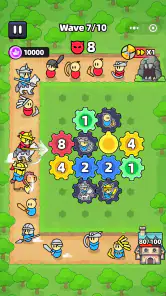



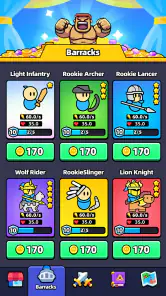
Analysis by Reviewed
What interests me most about Fortress of Gears is the promise of making decisions under pressure: the stronghold is the thing to protect, while the opposition keeps coming. That setup can make a casual game feel satisfying without requiring a long story session. I would approach it as a series of focused attempts, watching what holds and adjusting my choices rather than expecting a sprawling strategy campaign.
What the fortress premise asks of you
In a defense game, the satisfying moment is not simply seeing an enemy disappear; it is recognizing why a setup worked. I look for that cause-and-effect loop here: prepare the fortress, meet a wave, notice a weakness, and use the next opportunity to respond. That makes each run useful even when it does not end in a clean victory. A failed defense can still show whether I spent too much attention on one side or left the stronghold exposed.
This is also why the game seems best suited to players who enjoy repeating a scenario with a slightly better plan. Someone who wants a level-by-level adventure with a large cast and a carefully unfolding plot may find the central defense idea narrower than expected. I would choose it for tactical tinkering and pressure, not for a story-first experience or a broad collection of unrelated activities.
Speed expectations and the rhythm of a session
I would not judge the pace only by how quickly a round begins. A defense game needs enough breathing room to let a player read the situation, but not so much that the threats feel harmless. The useful question is whether the game gives me time to make meaningful choices before reacting. If I have only a few minutes, I would start a session when I can give the screen my attention rather than treating it like something to tap through while distracted.
That distinction matters in everyday use. On a short break, I might try one run and focus on a single decision: what to reinforce first, or which weakness to address after a difficult wave. If the game makes a run longer than I expected, it is better to finish at a natural stopping point than to begin another attempt just because the first one ended. The fortress premise suggests recurring pressure, so I would save it for a moment when I can stay engaged instead of opening it during a task that may interrupt me at any second.
Heavy-use moments: where attention matters
The busiest part of a defense game is usually the point at which several threats demand attention at once. That is where a player can discover whether a plan is robust or only works when everything arrives in the expected order. My practical tip is to make one deliberate change at a time between attempts. If I alter several parts of a setup at once, it becomes harder to tell which decision improved the defense and which one merely added complexity.
I would also avoid treating every loss as a reason to spend more. The game is free to download, with in-app purchases listed from $0.99 to $99.99 per item, so it is sensible to learn the basic loop before deciding whether any optional purchase is worthwhile. I would first work out what kind of obstacle is actually stopping progress. Spending without a clear reason can make a strategy game feel less like problem-solving and more like trying to buy relief from a difficult moment.
More From Our News Desk

Weather by Xiaomi Review: Clear at a Glance, Less Clear Up Close

X Under Pressure: Can It Recover When Posting Goes Wrong?

Clash of Clans Is Won Between the Battles

Android Auto Makes the Case for Quieter Car Software

MobiOffice: Transforming Mobile Productivity with Seamless Integration

EA SPORTS FC™ Mobile Soccer: Redefining Mobile Sports Gaming
That approach is especially useful for younger players or anyone sharing a device. The game carries an Everyone age rating, but in-app purchases still make it worth checking the device’s purchase controls before handing it to a child. The rating is a useful guide to intended audience, while purchase settings are a separate practical matter. I would set those controls in advance rather than relying on a child to distinguish optional spending from the core game.
Reliability, recovery, and the limits of a recommendation
Fortress defense can be unforgiving when a run is interrupted, because returning without remembering the plan may make the next decision feel disconnected. I would treat each attempt as a self-contained learning session and keep a simple mental note of what failed: a weak point, a poor priority, or a response that came too late. That small habit makes restarting less frustrating and gives the next run a purpose.
I cannot promise that every session will feel equally smooth on every phone. Performance depends on the device and its current workload, and the sensible test is to try a short session on the phone you actually plan to use. If the game feels slow or the display becomes uncomfortable during a crowded moment, close other demanding apps and try again before deciding whether the device is the issue. I would not assume that a more powerful phone automatically makes the strategic decisions better; clear feedback and comfortable controls matter just as much.
Who will enjoy it, and who may prefer something else
I would recommend this style of game to someone who likes defending a fixed objective, refining a plan, and learning from repeated attempts. It can suit a commute or a quiet break when you have enough uninterrupted attention for a round. It is less appealing if you mainly want an idle game that plays itself, a relaxed puzzle with no pressure, or an expansive campaign that constantly introduces new settings and characters.
Compared with familiar casual alternatives, the fortress setup asks for more active prioritizing than a simple matching game and more direct involvement than an idle builder. That is its clearest trade-off: it offers a reason to think about each attempt, but it may not be the best choice when you want to glance at your phone and make progress without concentrating. If that distinction matches what you want, the premise is a more useful guide than the broad label “casual.”
Practical details and a fair performance verdict
Solid Games released the game on February 20, 2025, and the current version is 2.2.5. It is free, has more than a million installs, and holds an average rating of 4.1 from around fourteen thousand ratings, with 285 reviews. Those figures suggest a game with an established audience, but they cannot tell me whether its pacing suits your taste; the defense loop is the more important thing to consider.
For compatibility, the listed minimum is Android 5.0, which gives older Android devices a possible route to trying it, though a minimum operating-system requirement is not a guarantee of equally comfortable performance on every model. I would make sure there is enough free space and close apps that are using the phone heavily before a longer session. If you are choosing between this and a lighter casual title, pick this one when you want focused defense decisions, not simply the smallest possible demand on your attention.
Setting the Stage
From the moment you dive into Fortress of Gears, you’re thrust into a gritty, mechanical dystopia. The visual aesthetics are stellar, with graphics that pop and landscapes that seem to stretch endlessly. I found myself lost in the intricate details of the fortress landscapes. This isn't just a game; it's an experience. The storyline grips you from the get-go, pulling you into a world where every move counts.
Gameplay that Keeps You Hooked
The gameplay is where Fortress of Gears truly shines. It blends strategy with action seamlessly. You’re not just in charge of navigating through enemy territories; you’re crafting your own strategies to outsmart opponents. The game challenges your strategic thinking, making every victory feel incredibly rewarding. I particularly enjoyed the balance between resource management and combat, which keeps you engaged as you figure out the best ways to utilize your gear and troops.
One of the game’s standout features is its gear customization. You have the freedom to modify and upgrade your equipment, giving you a personalized edge in battles. This aspect is a game-changer, allowing for a unique gameplay experience each time you dive into a mission.
Sound and Visuals – A Feast for the Senses
The sound design in Fortress of Gears is impeccable. The soundtrack is a perfect blend of intense and immersive, adding layers to the gaming experience. Whether it’s the clanking of gears or the distant echoes of battle cries, the audio elements make the game feel alive. Coupled with high-quality visuals, it’s a sensory delight that keeps you glued to your screen.
Moreover, the attention to detail in the character designs and environments is commendable. Every scene feels like a piece of art, making you appreciate the effort put into crafting this world.
Wrapping It Up
In conclusion, Fortress of Gears is more than just a game; it’s a strategic adventure that demands your full attention. It's perfect for those who love a challenge and enjoy delving into a detailed, immersive world. If you’re looking for an action-packed strategy game that tests your skills and keeps you engaged from start to finish, this is definitely a title to try. So gear up, strategize, and dive into the adventure that awaits!
Fortress of Gears Frequently Asked Questions
How much storage space does Fortress of Gears need?
Before downloading Fortress of Gears, it’s sensible to check that your device has enough free storage for the game and its installation. The amount required can vary with the device and the version available, so review the space shown on your app store before installing. Leaving some room for other apps and updates can also help keep your device running comfortably.
Who is the developer of Fortress of Gears?
Fortress of Gears is developed by Solid Games. If you like the idea of building a gear-based stronghold and holding it against waves of foes, the developer name can help you identify the game when browsing your app store. It is a casual game, so it may appeal to players looking for an accessible mobile experience built around defending a fortress.
What age group is Fortress of Gears suitable for?
Fortress of Gears is rated Everyone, so it is presented as suitable for a broad audience. Its casual game format makes it approachable for players looking for an accessible mobile experience. As with any game, parents may wish to check the in-app purchase options and decide whether they are appropriate for younger players before downloading.
What is Fortress of Gears about?
Fortress of Gears is an action-packed mobile game that combines elements of strategy and combat. Set in a steampunk-inspired world, players take control of powerful mechanical fortresses equipped with various weapons and defenses. The objective is to battle through levels, defeat opponents, and upgrade your fortress to become the ultimate champion.
Is Fortress of Gears free to play?
Yes, Fortress of Gears is free to download and play. However, it does offer in-app purchases that allow players to buy resources, upgrades, and other items to enhance gameplay. While these purchases are optional, they can provide advantages and expedite progress within the game. The available purchases range from $0.99 to $99.99 per item, so it is worth reviewing spending controls before playing.
Pros
- Engaging gameplay with strategic depth.
- Stunning graphics and smooth animations.
- Wide range of customizable gears.
- Frequent updates with new content.
- Multiplayer mode for competitive play.
Cons
- Requires constant internet connection.
- In-app purchases can be expensive.
- High battery consumption during play.
- Occasional server connection issues.
- Steep learning curve for beginners.
- Category
- Casual
- Version
- 2.2.5