TradingView: Track All Markets
- 11.88K
- 4.7
- Installs
- 10.00M
- Price
- Free

Screenshots
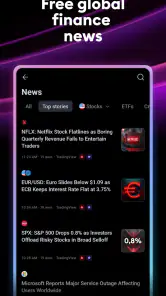
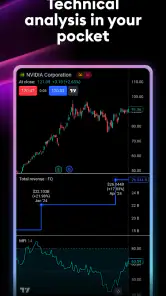
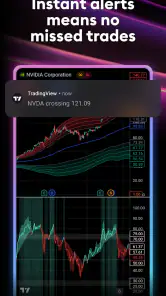
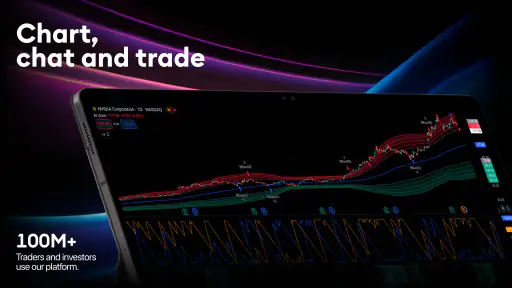
Analysis by Reviewed
When I want to check a market, I don’t always want to place a trade; often I just need a clear picture of what changed and what deserves a closer look. That’s the role I find TradingView: Track All Markets best suited to: a finance app for monitoring markets, studying charts and collecting ideas without treating every glance at a price as a reason to act. Its breadth is useful, but the real benefit comes from building a repeatable routine rather than trying to watch everything at once.
Choosing what deserves attention
Before opening charts, I’d decide what I’m trying to learn. Am I checking whether a stock’s move is continuing, comparing a currency pair with a broader market trend, or simply following news around an asset I already know? That small choice matters because the app can show a lot, and an unfocused session can quickly turn into switching between instruments without reaching a conclusion.
For someone deciding whether to try it, I’d describe its main appeal as a research workspace rather than an all-purpose money app. It suits curious market watchers who want to study charts across different asset types, and it is less compelling for someone whose only need is checking an account balance or making a straightforward purchase. I find it most useful when I arrive with a question and leave with a specific next step—or a reason not to act.
A practical routine, from watchlist to decision
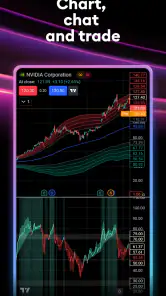
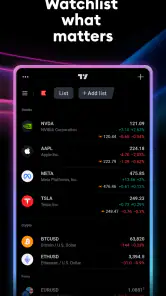
I’d start by choosing a manageable group of instruments I genuinely follow, instead of filling the screen with every interesting ticker. Then I can open a chart when something catches my attention, change its timeframe to distinguish a short-lived move from a broader trend, and use indicators or drawing tools to test a question. For example, I might mark a level I want to watch and set an alert, then close the chart and get on with my day. That workflow turns the app into a prompt to review, not a demand to stare at prices continuously.
A useful habit is to write down why an instrument is on my list before I add more tools. If I’m watching a stock because of a news event, a chart pattern alone may not answer the question I care about. If I’m comparing crypto with a currency pair, the same timeframe and a consistent set of chart settings make the comparison easier to interpret. These small choices help prevent a crowded screen from feeling like analysis when it is really just more information.
I’d also keep a short note alongside my own routine about what would make me reconsider an idea. For instance, if I’m watching a level because I think it may act as support, I should decide what would count as a meaningful move through it before an alert arrives. That way, I’m less likely to change the rules after seeing a dramatic candle. It’s a simple discipline, but it makes charting more useful than repeatedly checking the same price with no plan.
From market signals to the next step
Alerts are most valuable when I treat them as a handoff: they tell me when to return, but they don’t tell me what to do. After an alert, I can reopen the chart, check the context, and decide whether the move still fits my original idea. That separation is especially helpful on a busy workday, when I can’t keep an app open. It also makes the limits clear: a notification is a reminder to investigate, not a guarantee of a good entry or a substitute for risk planning.
More From Our News Desk

Weather by Xiaomi Review: Clear at a Glance, Less Clear Up Close

X Under Pressure: Can It Recover When Posting Goes Wrong?

Clash of Clans Is Won Between the Battles

Android Auto Makes the Case for Quieter Car Software

MobiOffice: Transforming Mobile Productivity with Seamless Integration

EA SPORTS FC™ Mobile Soccer: Redefining Mobile Sports Gaming
The community can serve as another handoff, from my own chart reading to other people’s explanations. I’d use shared ideas to find questions worth checking, not copy a strategy simply because it is presented confidently. A chart can look persuasive while leaving out the author’s assumptions, time horizon, or tolerance for losses. Comparing someone else’s view with my own notes is more useful than treating social activity as a signal service.
In a practical handoff, I might use TradingView to identify an area that needs attention, then move to a separate source to verify the details that matter to my decision. If I’m considering an actual transaction, I’d review the relevant account, order options, and risks where I execute it. Keeping research and execution distinct helps me avoid the easy but misleading leap from “this chart is interesting” to “I should trade now.”
Who will get the most from it
I see the strongest fit for people who follow several markets, enjoy visual analysis, or want one place to review charts before making decisions elsewhere. A beginner can use it to learn how timeframes, indicators, and price levels change a chart’s story, provided they take it slowly. Someone who already has a broker they prefer can still use TradingView as a research companion rather than replacing that broker. That distinction matters: charting and market discussion are not the same thing as order execution or personal financial advice.
It can also suit someone who wants to build a calmer check-in habit. Instead of leaving several market apps open, I can choose a small watchlist, review it at a time that works for me, and let alerts handle the moments when I want to return. The benefit is not that the app removes uncertainty; it gives me a structured place to notice changes and decide whether they deserve more attention.
On the other hand, if you only need a simple balance check or a basic way to buy and sell, a dedicated banking or brokerage app may feel more direct. TradingView’s range of tools can be a distraction for someone who has no interest in technical analysis. I’d also avoid using its community feed as a shortcut to investment decisions. More viewpoints can be educational, but they can also make it harder to stick to a plan if I keep changing it in response to every confident post.
For a realistic everyday example, imagine I’m following a company while commuting. I can check its chart, compare the move with the wider market, and set an alert for a level I want to revisit. Later, the alert brings me back; I review the chart and any relevant financial news before deciding whether further research is worthwhile. The useful outcome may be no trade at all. That’s a strength of a monitoring tool: it can help me be more deliberate, as long as I don’t mistake convenience for certainty.
First Impressions: A User-Friendly Interface
From the moment I launched TradingView: Track All Markets, I was hooked. The user interface is sleek and intuitive, which is a breath of fresh air compared to some of the clunky platforms out there. It’s like they’ve thought of everything to make the experience as seamless as possible. Whether you're a seasoned trader or just getting your feet wet, you’ll find navigating through the app a breeze. Plus, it’s super customizable. You can tweak the charts and tools to fit your trading style. How cool is that?
All Your Markets in One Place
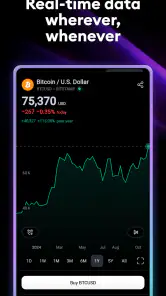
One of the things I love most about TradingView is how it consolidates data from various markets. No more jumping from app to app! You can track stocks, forex, cryptocurrencies, and even commodities all in one place. This is perfect for someone like me who dabbles in a bit of everything. The real-time data updates are also incredibly reliable, ensuring that I’m never out of the loop when it comes to market changes.
This breadth is most helpful when I want to compare markets without rebuilding my whole routine in separate apps. It doesn’t mean every instrument belongs on my daily screen, though. I get more value by keeping only the charts connected to a real question—such as whether a move is isolated or part of a wider shift—than by treating the app as a live wall of prices. If I need to execute a transaction, I’d still check the tools and terms of the service I use for that step rather than assume a charting app is the right place to complete it.
For comparisons, I find it useful to keep the question narrow: is one market moving in a similar direction, or is it behaving differently? Looking at charts with matching timeframes can make that comparison clearer, but it doesn’t prove that one asset caused another to move. This is a small but important distinction for anyone using a multi-market view: correlation can prompt research, not settle it.
Social Features and Community
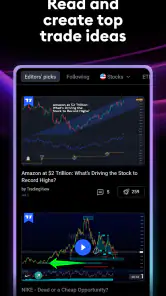
Another standout feature is the app’s social aspect. Trading can often feel like a solitary activity, but with TradingView, you’re never alone. You can connect with other traders, share insights, and even follow the strategies of top investors. It’s like having a trading community right in your pocket. Plus, the social features can be a great way to learn and grow your trading skills. I’ve picked up so many tips just by engaging with the community.
I’d keep that learning process active rather than passive: when someone shares a chart, I’d ask what would change their view and whether the idea still makes sense on a different timeframe. That simple check helps separate a useful explanation from a striking picture. It also makes the community more valuable to a learner who wants to understand reasoning, not just collect predictions.
There is a trade-off in having ideas and discussion close to the charts: it is easy to confuse popularity with evidence. I’d treat posts as leads, then check whether the chart’s timeframe, assumptions, and relevant news match my own situation. If browsing other people’s opinions makes me less consistent or more anxious, I’d spend less time in that part of the app and focus on my watchlist instead.
Advanced Tools for Every Trader
TradingView doesn’t skimp on the technical analysis tools, either. You’ve got access to a ton of indicators and drawing tools that help you make informed trading decisions. And if you’re into coding, you can even create your own custom indicators. It’s like a playground for traders! I found the alert features particularly handy. You can set alerts for price changes, news, and more, so you’ll never miss out on a trading opportunity.
The trade-off is that a large toolkit can invite overcomplication. I’d begin with a clean chart and add an indicator only when it answers a specific question; stacking several that measure similar things can make the picture look more convincing without making the decision better. Custom indicators offer room for experimentation, but they also require care: a tool I create reflects the assumptions I put into it, not an independent confirmation that a trade is sound.
One practical way to keep the interface readable is to save complexity for the moment it is useful. I’d begin with price and a timeframe, mark only the levels I plan to revisit, and add an indicator when I can explain what it contributes. If a chart becomes hard to interpret, removing tools can be more valuable than adding another one. That approach is especially helpful for newcomers, who can otherwise mistake a busy chart for a more reliable one.
Cost, learning curve, and the right expectations
The app is free to download, and its Everyone age rating makes it broadly accessible. TradingView Inc. is the developer. The app has a 4.7 average from around 833,000 ratings, with more than 10 million installs; optional in-app purchases range from $6.69 to $759 per item. I’d treat the free starting point as a way to learn whether the charting workflow suits me, then consider any paid option only if I know which specific limit I need to address. A large price range is a reason to check the exact offer in the app before committing, not to assume every user needs an upgrade.
Compared with a broker’s built-in charts, TradingView’s appeal is the focus on charting across markets and the chance to explore a broad community. A broker is usually the more natural place to manage an account and place orders; a basic finance app is quicker if all I want is a glance at a portfolio. TradingView sits between those habits as a research workspace, and that extra depth comes with a learning curve. I would not choose it for a quick, no-frills snapshot if its chart controls and social content are likely to slow me down.
That comparison also helps answer whether it can replace a broker: I wouldn’t rely on it as a substitute for the account and execution tools I use elsewhere. Its value for me is in following markets, examining chart behavior, and gathering viewpoints. If your priority is to place an order quickly or manage cash and holdings in one familiar screen, the app built around that task will likely feel more straightforward.
All in all, TradingView: Track All Markets is a robust and versatile app that caters to traders of all levels. Whether you’re just starting out or are a seasoned pro, there’s something in it for you. The combination of its user-friendly design, comprehensive market coverage, and social features makes it a must-have tool in any trader’s arsenal. If you haven’t tried it yet, I highly recommend giving it a go. Who knows, it might just become your go-to trading platform!
My recommendation is to use it with a defined purpose: follow a short list, set alerts for events worth reviewing, and make the final decision only after checking context and risk for yourself. If you prefer simple portfolio tracking, or want an app that removes the need to think through a trade, this is probably not the right fit. For curious market watchers who like to explore charts and compare ideas, it can become a useful daily companion—as long as I remember that better information supports judgment but never replaces it.
TradingView: Track All Markets Frequently Asked Questions
Is TradingView available for both Android and iOS?
TradingView is a mobile finance app for following markets, and it is available to users looking for a market-tracking experience on Android or iOS. Its focus includes stocks and crypto, alongside technical analysis, trading ideas, and financial news. If you use more than one kind of device, the app’s mobile access can make it easier to check market information while away from a computer.
How much storage or setup time should I expect before using TradingView?
The basic first step is to download the app and open it on your device. TradingView is free to download, so you can explore its market-focused offering before deciding whether it suits your routine. As with any finance app, the experience you get depends on the tools and information you choose to use, but its central purpose is to bring market tracking, analysis, ideas, and news together.
Can TradingView help me follow markets before I create an account?
TradingView is a finance app for following markets, with coverage described as ranging from stocks to crypto. Its store summary highlights technical analysis, trading ideas, and financial news, so it may suit users who want several kinds of market information in one place. The app is free to download, and its content rating is Everyone.
What is TradingView and what can I do with it?
TradingView is an advanced financial visualization platform that allows users to track market trends and analyze data across various financial instruments such as stocks, forex, and cryptocurrencies. With this app, users can create custom charts, set up alerts, and collaborate with other traders, making it an essential tool for both novice and experienced investors.
Is TradingView free to use or does it require a subscription?
TradingView offers both free and paid subscription options. The free version provides access to basic charting tools and a limited number of alerts. For advanced features like additional indicators, more alerts, and priority customer support, users can choose from several subscription plans, which vary in price and features offered. In-app purchases range from around $7 to $759 per item, so review the available options before purchasing.
Pros
- Comprehensive market coverage
- User-friendly interface
- Real-time data updates
- Customizable charts and alerts
- Community-driven insights
Cons
- Requires internet connection
- Can be overwhelming for beginners
- Limited free version features
- Ads in the free version
- Occasional app crashes
- Category
- Finance
- Version
- Varies with device