Google Family Link
- 58.65K
- 4.5
- Installs
- 100.00M
- Price
- Free

Screenshots
Analysis by Reviewed
I find parental-control apps are easiest to judge by asking what kind of help a family actually needs: a calmer bedtime, a clearer picture of app habits, or a way to set boundaries without checking a child’s phone constantly. Google Family Link is most useful when those goals involve a child’s Google-connected device and parents want one place to guide everyday use. It is a free tools app from Google LLC, rated for Everyone, and its 4.5 average from around 4.7 million ratings suggests it has reached a very broad audience. That popularity is reassuring, though it does not guarantee that every feature will suit every household.
Start with the family’s real routine
Before installing it, I’d decide which boundary matters most. If evenings are difficult, a daily time limit or a planned device break is more practical than trying to police every moment. If the concern is new downloads, app approval gives parents a chance to discuss a request before it becomes part of the child’s routine. The useful question is not whether parents can control everything; it is whether the available controls make a specific family conversation easier.
A realistic example: a child asks to install a game after school, while a parent is busy making dinner. Rather than turning the request into an argument later, the family can use app approval as a pause point, then talk about when the game fits around homework and bedtime. I like this kind of workflow because the tool can support a boundary, but the parent still explains the reason behind it.
Setting Up the Digital Playground
Getting started with Google Family Link is surprisingly easy. You download the app from the Play Store or App Store, set it up on your device, and then on your kid's device. The app walks you through the process step-by-step, so even if you’re not tech-savvy, it’s a breeze. The best part? You can monitor and manage your child’s activity from your phone. It's like having a window into their digital world!
Features That Make Life Easier
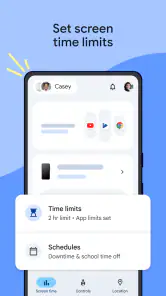
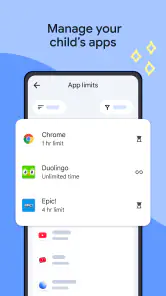
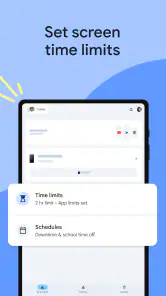
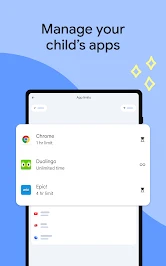
The features on this app are quite robust. For instance, you can set daily screen time limits, which is a lifesaver for those of us trying to balance screen time with other activities. It’s pretty neat to see your child's screen time broken down by app usage too. You can even approve or block apps your child wants to download from the Google Play Store. It feels like being the gatekeeper of your child’s online adventures.
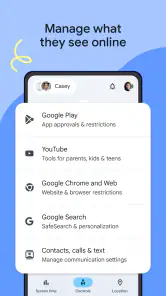
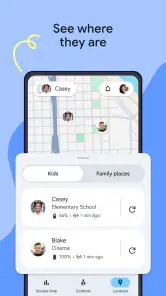
Google Family Link also offers location tracking features. You can see where your kids are, which is great for peace of mind, especially when they’re out and about. And if you’re worried about the content they’re stumbling upon, the app lets you manage the websites they can visit. Talk about having control over your child’s online environment!
What the controls can—and cannot—settle
One practical tip is to review app-usage information together rather than treating it as a report card. A child who spends longer in one app may be reading, creating, or simply unwinding; the number alone does not explain the context. I’d use that view to ask what they enjoy and whether a limit feels fair, then adjust the household agreement if needed. That keeps monitoring purposeful instead of turning it into a daily audit.
More From Our News Desk

Weather by Xiaomi Review: Clear at a Glance, Less Clear Up Close

X Under Pressure: Can It Recover When Posting Goes Wrong?

Clash of Clans Is Won Between the Battles

Android Auto Makes the Case for Quieter Car Software

MobiOffice: Transforming Mobile Productivity with Seamless Integration

EA SPORTS FC™ Mobile Soccer: Redefining Mobile Sports Gaming
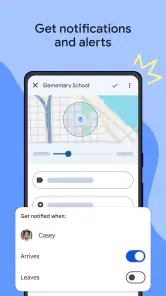
Location sharing is best treated as a coordination aid, not a substitute for checking in. It can help a parent know whether a child appears to have reached an agreed destination, but families still need to decide when location checks are appropriate and how to talk about them. Similarly, website management can provide a boundary, but it cannot replace age-appropriate conversations about unfamiliar links, persuasive content, or what to do when something online feels uncomfortable.
Where another approach may fit better
Family Link makes the most sense when the household wants parental tools connected to children’s Google accounts and devices. A router-level filter or a device’s built-in family settings may be a better starting point if the main goal is a broad household rule rather than managing a child’s activity from a parent’s phone. Families who want a highly customized, cross-platform monitoring system should compare options carefully rather than assuming one app will cover every device and preference. The right choice depends on the devices in use and on how much oversight parents consider appropriate.
There is also a social trade-off: controls work best when children know what is being managed and why. If a parent silently changes limits or checks location without a shared agreement, the app can become a source of mistrust instead of support. I’d set expectations together, explain which rules are firm, and revisit them as a child becomes more independent. For a household that wants no monitoring at all, or that prefers to handle screen habits through conversation alone, Family Link may feel like more involvement than necessary.
Fostering Independence with a Safety Net
One of the things I love about this app is how it balances control with independence. Kids need to learn how to navigate the digital space responsibly, and this app gives them room to do so while still providing a safety net. They can explore new apps and content, but with the boundaries you set.
Also, I must mention the fantastic family group feature. It allows you to create a family group and manage settings for multiple children at once. It’s particularly handy for larger families. Plus, it encourages conversations about digital habits, which is crucial in today’s tech-driven world.
Making setup and changes stick
To avoid a rushed setup, I’d begin with one or two clear rules rather than enabling every available control at once. Agree on a screen-time routine first, then use app approvals or website settings where they address a real concern. When a child has more than one device, check that the family’s expectations make sense across their daily routine; a rule that seems clear on one device can be confusing if the child switches to another. This small planning step can prevent the app from feeling arbitrary.
Families often wonder whether they can use the controls without making every day a negotiation. In my view, the answer depends on consistency: explain the rule, keep it predictable, and make exceptions explicit instead of changing limits in the heat of an argument. Parents should also expect some adjustment as a child’s needs change. A useful control is one the family is willing to review, not a permanent verdict on how a child should use technology.
Choosing the right tool for the job
The main alternative I’d consider is not necessarily another monitoring app. A household that wants a rule applied across shared home internet may find a router-level filter more relevant, while a parent who only needs basic device boundaries may prefer the family controls already built into a device. Those approaches solve different problems: one focuses on the household connection, another on a particular device, and Family Link on guiding a child’s Google-connected digital routine. They are not interchangeable, so I’d choose according to where the difficulty actually occurs.
There is a practical trade-off when several kinds of devices are involved. Before relying on any one tool, map out what the child uses for school, entertainment, and communication, then identify where the parent needs visibility or a limit. If the family’s priority is consistent rules across a mixed-device setup, a single Google-centered solution may not feel complete. If most of the child’s relevant activity is already connected to Google, however, keeping guidance in one place can be simpler than piecing together unrelated controls.
A low-friction way to begin
I’d treat the first week as a chance to learn the family’s actual patterns, not as a test of whether the app can enforce every rule. Start with a clear bedtime or after-school boundary, and pay attention to whether it fits homework, activities, and the child’s need to contact family. App-usage information can help locate a friction point, but it should lead to a conversation rather than an automatic restriction. This is a useful way to avoid setting limits based on assumptions about how a child spends time.
When a child asks for an exception, I’d make the decision concrete: is this a one-off change for a particular day, or does the routine need revising? Keeping those separate helps prevent a temporary allowance from becoming a confusing new rule. Likewise, if a limit repeatedly clashes with a legitimate activity, that is a reason to revisit the agreement rather than quietly adding workarounds. The app can make a boundary easier to manage, but the family still has to decide whether that boundary is sensible.
Who will get the most from it
I think Family Link is a strong fit for parents who want practical support with a child’s app requests, screen-time routines, and location coordination, and who are willing to explain how those controls work. It may be especially helpful when a family is trying to replace repeated reminders with a predictable routine. The app is less compelling for parents who do not want digital oversight, or for households whose main need is a uniform rule across devices and services that do not fit neatly into a Google-connected setup.
One question families often have is whether a parental-control app can guarantee that a child will encounter no unsuitable material. I would not treat any set of controls as a guarantee. Website management and app decisions can help shape a child’s environment, while open conversations and a plan for asking for help remain important. Another common concern is whether location information should be checked constantly. I’d reserve it for agreed coordination needs; frequent checking without a clear reason can undermine the trust the tool is supposed to support.
What to expect when the routine changes
Family rules rarely stay fixed through a whole school year. A child may start using a device for a new activity, take on different responsibilities, or need more independence getting to and from places. I’d review the settings when the routine changes, not just when a conflict appears. That makes adjustments feel connected to real needs rather than like a reaction to one frustrating evening.
It also helps to decide who will manage settings if more than one adult is involved. A parent who handles app requests might not be the person who sets the evening routine, and inconsistent expectations can make a child feel that the rules depend on which adult is holding the phone. A quick conversation between caregivers before changing a limit can prevent that confusion. The app can help organize oversight, but it cannot decide how adults should coordinate with each other.
Small choices that make oversight fairer
One useful habit is to tell a child what a setting is meant to do before it becomes relevant. For example, if a device break is part of bedtime, explain the timing in advance rather than waiting until a child is midway through an activity. That gives them a chance to finish a sensible stopping point and reduces the impression that a limit is being imposed arbitrarily. I’d also avoid using every control simply because it is available; each one should answer a clear concern.
Parents can make app approval more useful by asking a child to explain what an app is for and where they heard about it. That conversation may reveal whether the request is for a school task, a shared hobby, or something a friend mentioned. The decision can then be about the actual use rather than a quick yes or no based on the app’s name. It is a small workflow, but it helps turn supervision into a chance to practice judgement.
Concluding Thoughts
All in all, Google Family Link is like having a tool kit for digital parenting. It empowers you to guide your children’s digital journey without being overly intrusive. The app’s design is user-friendly, and its features are comprehensive enough to cover the bases without being overwhelming. If you’re a parent looking to manage your child’s screen time and online activity, this app is worth a try.
It has also been available since 2017, and its current version is 2.65.0.2025w46.832305568, with Android support starting at version 7.0. With over 100 million installs, it is clearly a familiar option, but I’d still judge it by how well its controls fit your family rather than by reach alone. My recommendation is straightforward: try it if you want practical help with limits, app requests, and a shared approach to online independence. Skip it if you want a completely hands-off style of parenting or need a single solution for a mixed set of devices and rules. The strongest result comes when the app backs up trust and conversation instead of trying to replace either.
Google Family Link Frequently Asked Questions
Who develops Google Family Link, and what kind of app is it?
Google Family Link is a tools app developed by Google LLC. Its purpose is to help parents guide children with parental tools, including managing apps and setting screen time limits. Before installing it, consider which routines you want to support and whether the app’s controls suit your family’s devices and approach to digital parenting.
Is Google Family Link suitable for all families?
Family Link can be useful for parents who want tools to help manage a child’s device use, but families differ in their needs and expectations. Think about the rules you want to establish, the devices everyone uses, and how you will talk about those rules with your child. The app works best as support for family conversations, rather than a substitute for them.
Can I use Google Family Link to approve or manage app downloads?
Family Link is designed to help parents manage apps and review a child’s app activity. These tools can help you guide which apps are part of your child’s device experience, though the available controls may differ depending on the device and platform. Before relying on a particular setting, explore how it works on the devices your family plans to use.
Does Google Family Link work without an internet connection?
Family Link is intended to help parents manage a child’s device and review activity, so an internet connection is important for features that communicate between devices. If a device is offline, some controls or updates may not take effect immediately. Consider your family’s connectivity when deciding how much to rely on the app, and use it alongside conversations and clear expectations about device use.
Can parents use Google Family Link to manage apps and screen time?
Yes. Family Link is designed to give parents tools for managing apps and setting screen time limits, as well as reviewing a child’s app activity. These controls can help families establish routines, but they work best when parents explain the rules and revisit them as a child’s needs change. Check that the features you want are available on the devices your family plans to use.
Pros
- User-friendly interface
- easy navigation.
- Allows remote control of children's devices.
- Comprehensive activity reports available.
- Supports multiple devices in one account.
- Free to use with no hidden charges.
Cons
- Limited features on iOS devices.
- Children can bypass some settings.
- Requires internet for full functionality.
- Limited control over app permissions.
- No support for third-party apps.
- Category
- Tools
- Version
- 2.65.0.2025w46.832305568