Google Chat
- 25.22K
- 4.5
- Installs
- 50.00M
- Price
- Free

Screenshots





Analysis by Reviewed
I judge a workplace chat app less by how many messages it can handle than by whether it helps people find the right conversation and the right file without adding another chore. Google Chat makes the most sense when a group already works with Google tools: it gives everyday coordination a place alongside that work. If your team uses a different ecosystem, the value is less automatic, and moving everyone over may create more friction than it removes.
Free access is only part of the cost question
Google Chat is a free business app from Google LLC, so there is no purchase price to weigh before trying it. That makes the decision less about paying for another messenger and more about whether it fits the way you already communicate. The app is rated for Everyone, and its broad reach is reflected in over 50 million installs, but popularity alone does not make it the right choice for every group.
For me, its strongest value is practical rather than flashy: messages can sit alongside the documents and meeting plans they relate to. If your team already works in Google’s tools, that can save the small but irritating effort of switching between a chat, a file, and a calendar entry. If your contacts use another platform, though, a free app can still cost you time if it means asking everyone to move.
That distinction matters when comparing it with the usual alternatives. A general-purpose messenger may be the easier choice for a family or friend group that already has a shared habit, while a team built around Google Workspace may get more from keeping coordination close to its documents. I would not switch simply because Chat is free; I would switch only if the group’s existing work makes the connection useful.
How Google Chat fits into everyday work
Okay, so you might be wondering, "Do I really need another messaging app?" Well, Google Chat is more than your run-of-the-mill messaging platform. It’s designed to integrate seamlessly with Google Workspace (formerly G Suite), making it a fantastic tool for both personal use and business communications. It’s like having a super-organized assistant that helps you keep track of all your chats and tasks without breaking a sweat.
Features That Make Life Easier
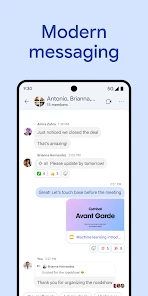
Alright, let’s talk features. One of the things I really dig about Google Chat is its ability to create dedicated spaces for different projects or groups. Think of it as having separate rooms for specific conversations, which you can access anytime without losing track of what’s happening. This is especially handy when you’re juggling multiple projects or if you’re part of a big family that loves to chat.
A workflow that stays attached to the conversation
A useful way to set up a space is around an outcome, not just a department: one for a launch, a household move, or a volunteer event. That gives questions, decisions, and shared material one place to live, instead of scattering them across unrelated group chats. I’d keep the space focused, though; if every passing topic gets its own room, the list becomes another thing to manage.
More From Our News Desk

Weather by Xiaomi Review: Clear at a Glance, Less Clear Up Close

X Under Pressure: Can It Recover When Posting Goes Wrong?

Clash of Clans Is Won Between the Battles

Android Auto Makes the Case for Quieter Car Software

MobiOffice: Transforming Mobile Productivity with Seamless Integration

EA SPORTS FC™ Mobile Soccer: Redefining Mobile Sports Gaming
For a realistic workday, imagine a colleague asking for feedback on a document while you are between meetings. A project space gives you a natural place to respond and point others to the relevant file, while a separate one-to-one conversation stays available for a quick private question. This is a modest distinction, but it helps prevent a team decision from disappearing into an individual chat history.
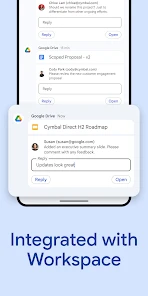
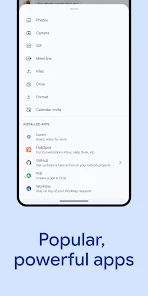
Another cool feature is its integration with Google’s suite of tools. You can easily share files from Google Drive, collaborate on Google Docs, and even schedule meetings with Google Calendar—all without leaving the app. It’s super convenient, especially when you’re working on a deadline and need to pull everything together quickly.
Where the integrations help—and where they don’t
The main benefit is context: a message about a draft can lead directly to the shared document, rather than leaving you to search through email or ask which version someone meant. My tip is to use the conversation to clarify what needs doing, then keep the actual working material in its proper shared file. Chat can point people toward the work, but it is not a substitute for organizing the document itself.
That distinction also helps when deciding whether Chat should replace your current messenger. Compared with a general-purpose app used by friends and family, its appeal is strongest when the group also relies on Google’s collaboration tools. If your circle mainly wants casual conversation and already agrees on another service, switching may add friction without giving much back. For a business already using Workspace, it is a more natural fit than maintaining a separate chat just to discuss shared files.
One useful habit is to make the space itself do some of the organizing: give it a clear purpose and direct questions to the conversation where the people who need them can see them. That way, a decision about a shared document does not live only in a private exchange. The trade-off is that this depends on everyone using the same conventions. If teammates keep posting updates wherever they happen to be, separate spaces can create a fresh search problem instead of solving one.
Let’s Get Personal
Now, I’ve tried a lot of messaging apps, but what I really appreciate about Google Chat is its clean and intuitive design. You don’t need a degree in rocket science to figure it out, which is a huge win in my book. Plus, the app is available on both Android and iOS, so you can keep the conversation going no matter what device you’re on.
Small habits that make it easier to live with
Notifications are where a tidy setup can either stay useful or become noisy. I’d reserve alerts for conversations that need a timely response and use snoozing when I’m concentrating or away from work. That is more effective than muting everything and then having to check every space manually. The trade-off is that people who expect every message to interrupt them may prefer a simpler, always-on group chat routine.
For someone joining a team, the practical first question is not how many spaces the app can hold, but which conversations matter enough to keep separate. Starting with a few clear spaces makes it easier to learn where updates belong. If you are invited into an already busy setup, asking which space is used for decisions and which is for quick coordination can save you from following every thread equally.
For those who love a bit of customization, Google Chat doesn’t disappoint. You can personalize your notifications, so you only get pinged for the really important stuff. And if you’re anything like me, you’ll appreciate the ability to snooze notifications when you need a little peace and quiet.
A small-team example shows where the balance lands. Imagine a few colleagues sharing a draft, collecting comments, and arranging a meeting to settle open questions. Chat can keep the back-and-forth together and make the relevant file easy to reach; the document remains where the actual edits belong, and the calendar remains where the appointment belongs. That division is helpful when people respect it. If the group expects a chat thread to serve as the permanent record of every decision, I would still write the final decision somewhere the team can reliably return to.
Who gets the most from it
I’d recommend trying it first for a work group that already shares files through Drive and regularly collaborates on Docs or plans meetings with Calendar. That group can judge the app on a concrete task rather than on a vague promise of better communication: choose one project, keep its discussion in a focused space, and see whether teammates spend less time asking where the latest file or decision lives.
It can also suit a volunteer group or household coordinating a finite project, such as an event or move, particularly if the people involved are comfortable with Google’s tools. For casual conversation, though, the platform everyone already checks is often the better choice. The most polished setup is no use if half the group forgets to open it.
Google Chat is a weaker fit for someone who wants one universal messenger for every part of life, or for an organization whose daily work is centered on a different collaboration suite. In those situations, keeping the existing tool may be simpler than splitting messages across services. I’d also be cautious about adopting it for a team that has no agreement about where announcements, quick questions, and decisions should go: the app cannot make those choices for people.
What the popularity and price do—and don’t—tell me
The app has a 4.5 average from around 322,000 ratings, and over 50 million installs show that it has reached a large audience. I see those figures as useful background, not proof that a particular team will enjoy using it. The more important test is whether the people you need to reach are willing to use it and whether its connection to your shared work reduces effort in practice.
Because the app is free, trying it does not require an upfront purchase. That makes a limited trial sensible: pick one active project, agree where its updates belong, and review whether the arrangement is clearer after a little use. The value comes from the time and confusion it saves, not from the absence of a price alone. A free app can still be the wrong choice if it creates another inbox or forces a group to maintain duplicate conversations.
The Final Word
So, is Google Chat worth downloading? If you’re already using Google’s suite of apps, then absolutely! It’s a seamless addition that can help streamline your communications and boost productivity. Even if you’re not a die-hard Google fan, the app’s features and ease of use are compelling enough to give it a try.
Its average rating is 4.5 from around 322,000 ratings, which suggests a lot of people find it useful, though I would treat that as context rather than a guarantee that it will suit your team. The clearest audience is someone who needs work conversations organized around Google files and meetings. If you need a messenger that works equally well as the shared default for a group committed to another platform, I’d stay with what everyone already checks.
In conclusion, Google Chat is more than just another messaging app; it’s a hub for collaboration and communication. Whether you’re managing a team, coordinating with family, or just keeping up with friends, this app has got you covered. So, why not give it a spin and see how it fits into your digital life?
Google Chat Frequently Asked Questions
Does Google Chat work with a personal Google account, or do I need Google Workspace?
Google Chat can be used with a personal Google account, while it is also part of Google Workspace for organizations. That makes it possible to try the app for individual conversations without joining a workplace plan. If you are considering it for a team, the account and Workspace setup your organization uses may shape which collaboration options are available.
What should I consider before switching my conversations to Google Chat?
Think about who you need to communicate with and whether they already use Google Chat or Google Workspace. The app is built around messaging and collaboration, so it may suit people who want work discussions and shared tasks in one place. If your contacts mainly use another messaging service, switching could mean asking them to adopt a new app as well.
Can Google Chat help me keep work discussions organized?
Google Chat is designed for communication and collaboration, including direct messages and team conversations. Its Workspace-focused approach can help separate discussions by person or group rather than leaving every exchange in one stream. Whether that organization is useful depends on how your team works and how consistently its members use the app for shared conversations.
Is Google Chat suitable for personal use, or is it mainly for workplaces?
Google Chat is a business-focused messaging app from Google LLC, intended for communication and collaboration as part of Google Workspace. It can also be used with a personal Google account, so it is not limited to workplace teams. Before downloading, consider whether its Workspace-oriented approach fits how you communicate, especially if you want to keep conversations and shared work organized.
What is Google Chat and how does it differ from other messaging apps?
Google Chat is a messaging platform that is part of Google's suite of productivity tools. Unlike other messaging apps, Google Chat is designed for business use and integrates seamlessly with other Google Workspace apps like Google Drive and Google Meet. It offers features such as direct messaging, team chat rooms, and the ability to share files and schedule meetings, making it suitable for professional communication and collaboration.
Pros
- Seamless integration with Google Workspace.
- User-friendly interface and navigation.
- Real-time collaboration features.
- Supports direct and group messaging.
- High customization for notifications.
Cons
- Limited integrations with non-Google apps.
- Occasional syncing issues reported.
- No advanced project management tools.
- Requires Google account for access.
- Mobile app lacks some desktop features.
- Category
- Business
- Version
- Varies with device